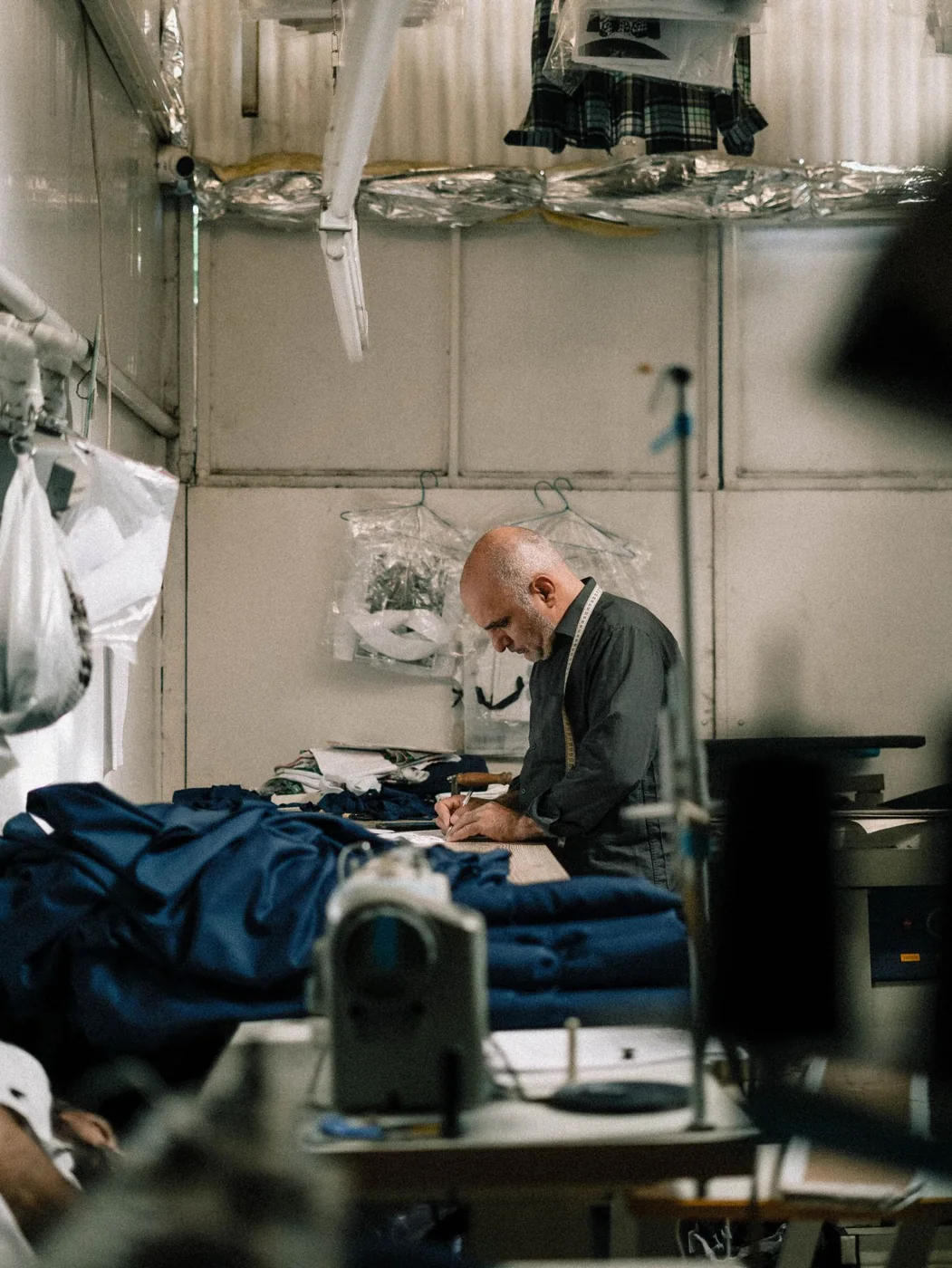
Bring an alterations conversation one clear example of the movement or fit question, using the actual garment and intended outfit without assuming a particular solution.
An alterations conversation is easier to begin when you can describe what the garment does in the situation that matters to you. The sleeve shifts when you reach, the hem meets a particular shoe or the waistband feels different when seated. Those observations are more useful than a broad request to make the item fit better. They give a qualified provider a concrete question to assess without deciding the technical solution in advance.
Choose the example that changes your use
Try the garment with the clothes and shoes that belong to its intended outfit. Identify the ordinary movement that produces the concern. Keep the example realistic: sitting for a meal, reaching across a desk or walking a normal distance. You do not need to test extreme positions to explain why the garment is difficult during its actual use.
Write the observation in your own words before the appointment. Separate what you feel or see from what you think may cause it. The hem catches at this shoe is an observation; the garment needs a particular technical change is a proposed solution. Leaving that distinction clear allows the provider to explain what is appropriate and what may not be possible.
Bring the relevant context
Take the actual garment and any supporting piece needed to demonstrate the question, following the provider's process. A trouser length discussion may need the intended footwear, while a jacket-layer issue may depend on the blouse beneath it. Do not assume a photograph alone will answer a physical fit question, though it can help you remember the arrangement you want to discuss.
Explain the garment's intended role and any limit that matters to your decision. You may want to preserve a particular detail or avoid changing another part that already works. Ask the provider to clarify the scope and implications of a proposed adjustment. Keep price, timing and the actual work to be done tied to their current information rather than an expectation from another garment or past service.
Treat the outcome as something to confirm
Do not pack an item for a trip on the assumption that an alteration will necessarily solve every concern. Allow an appropriate opportunity to review the finished result through the provider's process. Try the relevant outfit and movement again, and raise any remaining question clearly. A proposed adjustment and a completed, reviewed garment are different stages of the decision.
Keep the final arrangement with your wardrobe notes if it will help future use. This guide does not diagnose a fit issue or prescribe a sewing method. It offers a way to explain a practical concern with enough context for an appropriate professional conversation. A specific example can make that discussion clearer while leaving the technical judgement with the person qualified to assess the actual garment.
Related reading
How to Choose a Blazer That Travels Well, A Petite-Friendly Maxi Dress Fit Checklist.
Editorial note
Practical style and travel guidance. Follow the relevant maker’s instructions and check current arrangements with your provider. Availability and policies can change. Our outfit and packing suggestions are editorial guidance, not claims of hands-on testing.