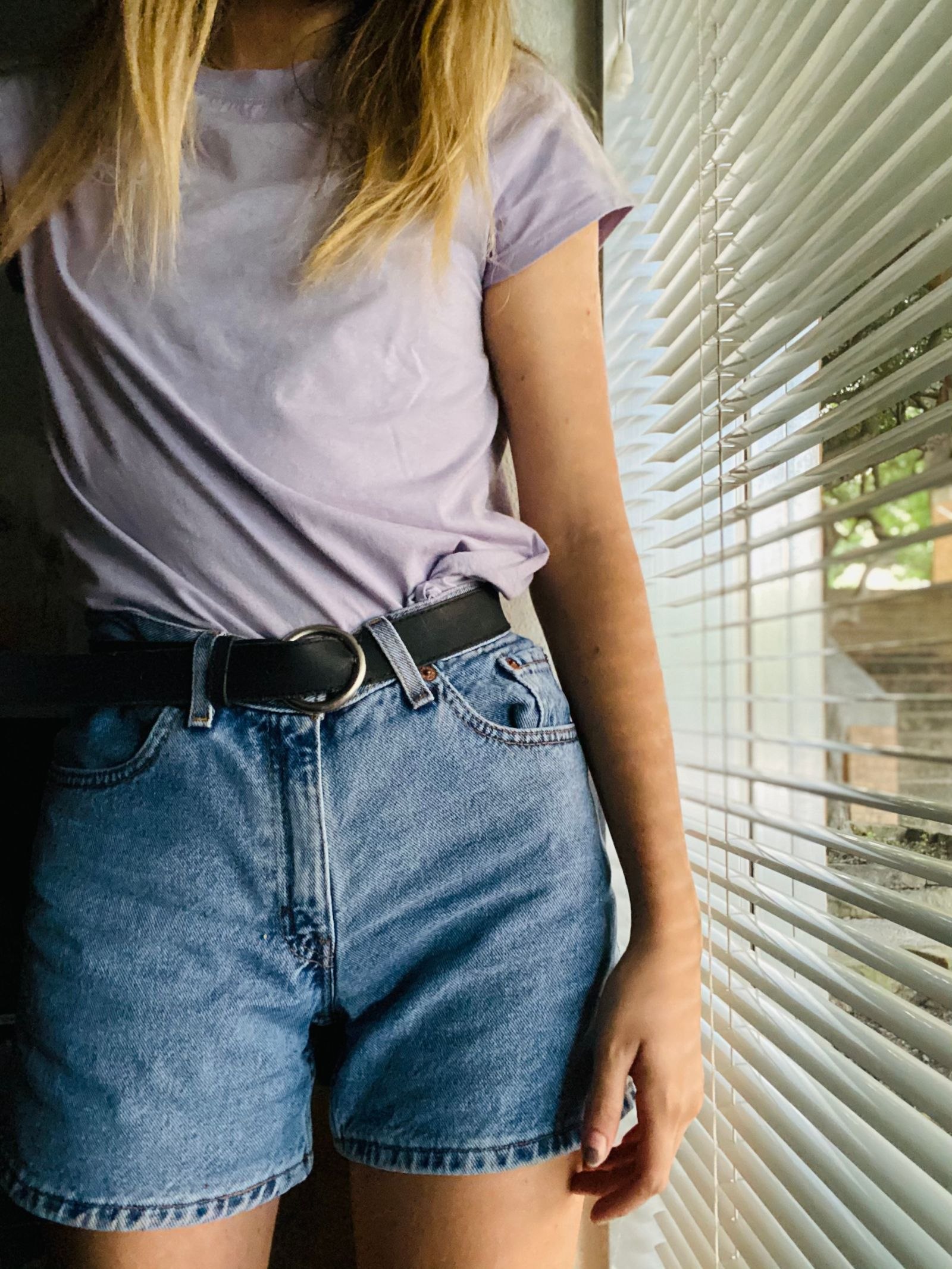
Check how a belt buckle and shirt knot share the waist of an outfit, then try sitting and moving before choosing a repeatable arrangement for the day.
A shirt knot and a belt buckle can both become the centre of an outfit at the waist. When they occupy the same small area, the combination may look deliberate or feel busier than you intended. Try the actual pieces together before deciding that one must always be removed. Their relationship depends on the shirt's shape, the belt and the way you wear the waistband.
Establish the waistband position
Put on the shorts, jeans or trousers where you normally wear them and fasten the belt in the intended way. Arrange the shirt without a knot first. This gives you a clear starting view of the buckle and the amount of fabric above it. Avoid lifting or tightening the waistband solely to create a temporary arrangement for the mirror.
Now make the shirt arrangement you are considering, respecting the garment's design and your comfort. Look at where the knot sits in relation to the buckle. It may cover it, rest beside it or leave a small gap. Decide which detail you want to lead. There is no need for both objects to be equally visible if the overall combination feels right to you.
Try the ordinary movement
Sit in a normal chair, stand and reach for something at a familiar height. Notice whether the knot or buckle changes position in a way that bothers you. A soft shirt will naturally move. The useful question is whether the arrangement remains comfortable and recognisable without repeatedly pulling it back into the first shape you made.
If the two details compete, change one element. You might choose another shirt arrangement, use a quieter belt already in the wardrobe or leave the knot out. Repeat the same movements after the adjustment. Changing several pieces together can hide the reason one version felt easier, making the successful outfit harder to reproduce later.
Check the full outfit before keeping it
Add the shoes, bag and any outer layer intended for the day. A close-up of the waist can exaggerate a small detail that is unobtrusive in the complete outfit. Equally, a bag worn across the body may introduce another line through the same area. Judge the whole arrangement in the way you expect to wear it rather than only the cropped detail.
Save a short note if you find a useful pairing: the pale shirt knotted beside the plain buckle, for example, with the specific shorts identified. The note does not need to become a rule for every shirt or belt. It records one combination that worked through real movement. That small clarity can make an existing waist detail feel considered without requiring another accessory or a new garment to complete the outfit.
Related reading
Choose a Shirt Tuck That Survives Ordinary Travel Movement, Linen Outfits for Warm-Weather Travel Without Overpacking.
Editorial note
Practical style and travel guidance. Follow the relevant maker’s instructions and check current arrangements with your provider. Availability and policies can change. Our outfit and packing suggestions are editorial guidance, not claims of hands-on testing.