
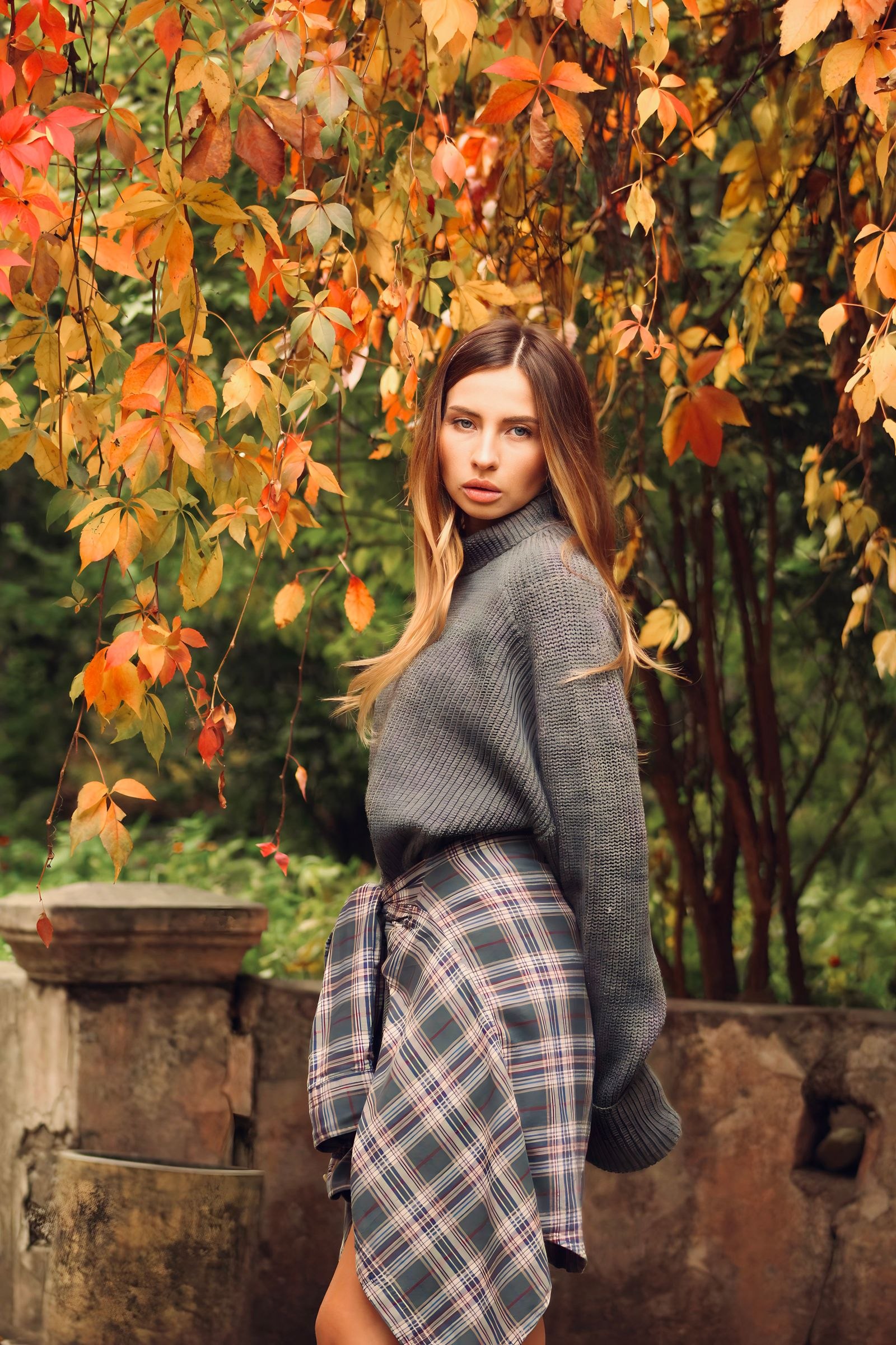
Compare a checked skirt with the actual knit you intend to pack, looking at visible texture, hem position and the complete outfit before adding another option.
A checked skirt brings its own pattern structure to an outfit, while a knit adds another surface and shape. The two can work together without requiring a precise colour match. Compare the actual garments to see how much pattern and texture remain visible in the way you intend to wear them. That is more useful than deciding from separate photographs that both pieces seem autumnal.
Begin with the complete pairing
Put on the skirt and knit with the shoes intended for the day. Arrange the knit at the hem in the way you prefer, whether loose or with a suitable tuck. Look at the amount of checked fabric visible beneath it. A longer knit can change the role of the pattern compared with a shorter one, even when the colours stay the same.
Notice the visual weight of the knit without treating appearance as proof of its fibre or performance. A chunky-looking texture does not establish every material property. Use the garment's actual information for care and other product questions. Here, the comparison is about the visible relationship between the two pieces you already have in front of you.
Look for a clear supporting role
Choose whether you want the knit to be a quiet background or another prominent element. A plain surface may leave the skirt as the main point of interest, while a textured knit may create a more layered effect. Try an existing alternative if you are uncertain. Keep the skirt and shoes unchanged so that the difference in the upper layer is easy to see.
Sit and move normally after choosing an arrangement. Check where the knit settles above the skirt and whether you are comfortable with that position. A tuck that looks balanced when carefully placed may be less useful if it continually changes during ordinary movement. Let the practical trial inform the styling choice rather than treating the first mirror view as the only successful version.
Add the planned outer layer
Put on the coat or jacket you expect to use and look at what remains visible. A long outer layer may cover much of the knit or change the amount of skirt pattern on show. Consider both indoor and outdoor versions if both matter to the day. This can reveal that the original pairing is enough without another scarf or accessory added for variety.
Record the pieces and the hem arrangement that worked. When packing, give the knit and skirt actual roles in the trip rather than adding them as a vague seasonal option. A checked skirt and knit combination can feel rich in detail while remaining simple to repeat. Its usefulness comes from the relationship you have tried, with texture, pattern and ordinary movement considered together.
Related reading
Packing Knitwear for an Autumn Weekend, A Five-Day City Break Capsule Wardrobe That Leaves Room for the Trip.
Editorial note
Practical style and travel guidance. Follow the relevant maker’s instructions and check current arrangements with your provider. Availability and policies can change. Our outfit and packing suggestions are editorial guidance, not claims of hands-on testing.