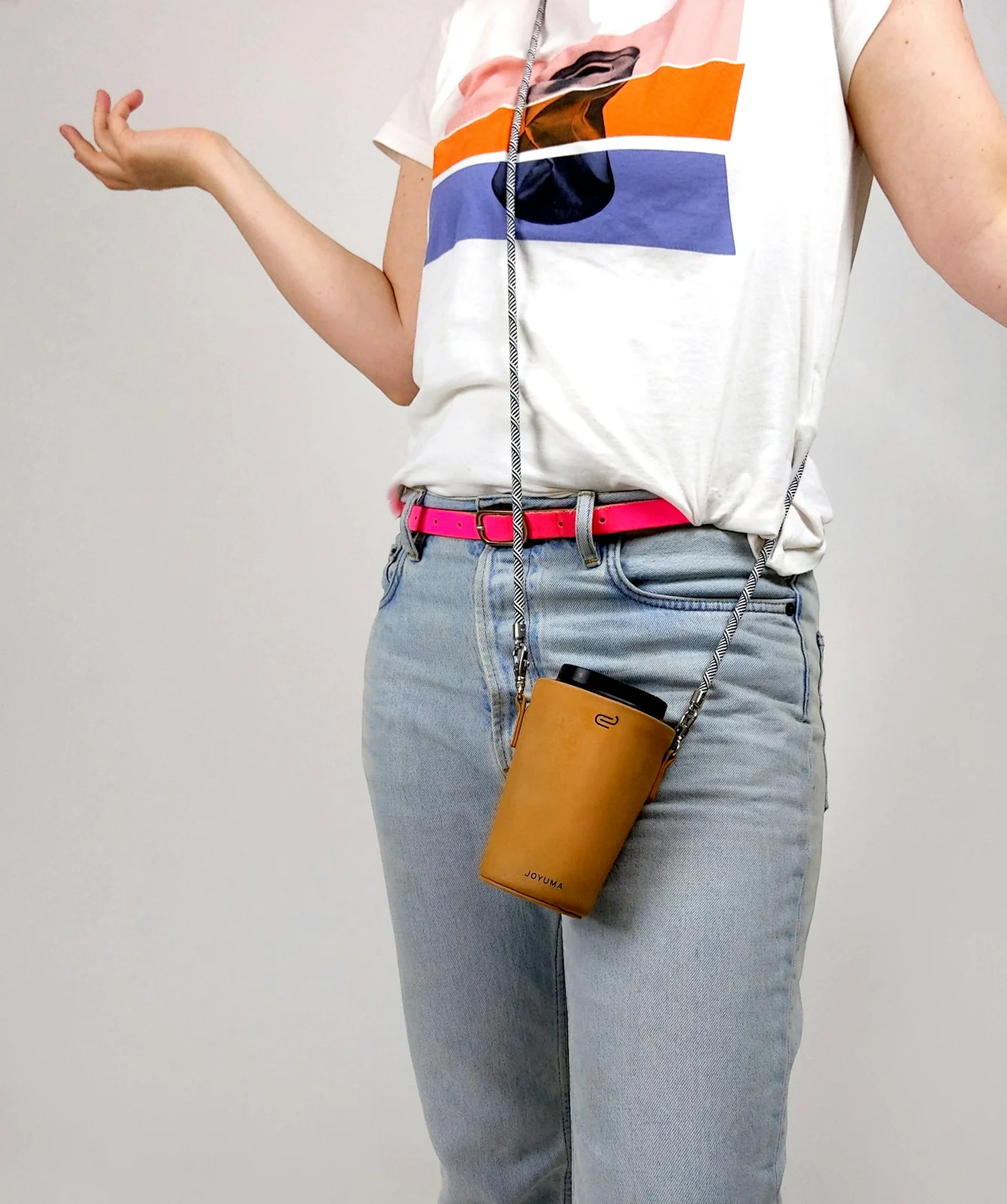
Assess a cup carrier through its intended use and the clothing around its strap, without assuming a photograph establishes performance or suitability.
A cup carrier worn on a cord can become a visible part of a casual outfit, but its practical use comes before the styling. Check the maker's instructions for the actual carrier and container before deciding whether it belongs on your route. A photograph cannot establish compatibility, suitable contents or performance. Once the intended use is clear, assess how the strap and carried shape interact with the shirt, coat and other belongings you will wear. The outfit should not obscure the need to use the object appropriately.
Establish the intended arrangement
Read the current product information for the specific carrier, including compatible containers, contents and handling. Do not infer those details from a similar-looking sleeve or from the image accompanying a style article. If the instructions do not support the use you have in mind, choose another suitable arrangement. Avoid improvising attachments or treating a decorative cord as a guarantee about load or retention. The first decision is whether the object is appropriate for the task, not whether its colour works with the jeans.
Check the strap with the real layers
Use the carrier only through the arrangement permitted by its maker and assess the clothing interaction in an appropriate setting. Notice where the cord rests on the shirt and how an outer layer changes that position. A soft neckline, collar or loose hem may share space with it. Do not force a garment into an uncomfortable shape to make room. Another outfit or carrying method may be more practical. The style decision should support intended use rather than create a workaround around it.
Consider the other belongings
Think about the bag, coat and items already needed for the outing. Adding another strap can make transitions more crowded, even when each object seems small on its own. Check whether the arrangement remains manageable when entering a venue or sitting down. Follow the carrier's instructions throughout; do not treat a hands-free appearance in a photograph as permission to ignore handling requirements. A simpler group of belongings may be preferable for a day with frequent doors, transport changes or shared tables.
Plan the indoor pause
Decide how the carrier and container will be handled at a café or other stop through their intended use and the venue's arrangements. Keep belongings out of walkways and away from unsuitable surfaces. Do not rely on the carrier to solve every storage or carrying question throughout the day. If the arrangement becomes awkward, choose an appropriate alternative rather than defending it because it completed the outfit at departure. Practical usefulness remains the reason for bringing the object.
The visual detail can be enjoyable when the working arrangement is already understood. You might prefer the contrast of a small carrier against a simple T-shirt, or decide that another strap adds more than the outfit needs. Either choice is valid. A thoughtful accessory decision separates appearance from claims of performance and lets the actual product instructions, route and comfort determine whether the object belongs in the day.
Continue planning with Buying Fewer, Better Travel Accessories: A Practical Shopping Filter, Small Crossbody or Tote: Which Bag Fits Your Travel Day?.
Editorial note
Practical style and travel guidance. Follow the relevant maker’s instructions and check current arrangements with your provider. Availability and policies can change. Our outfit and packing suggestions are editorial guidance, not claims of hands-on testing.