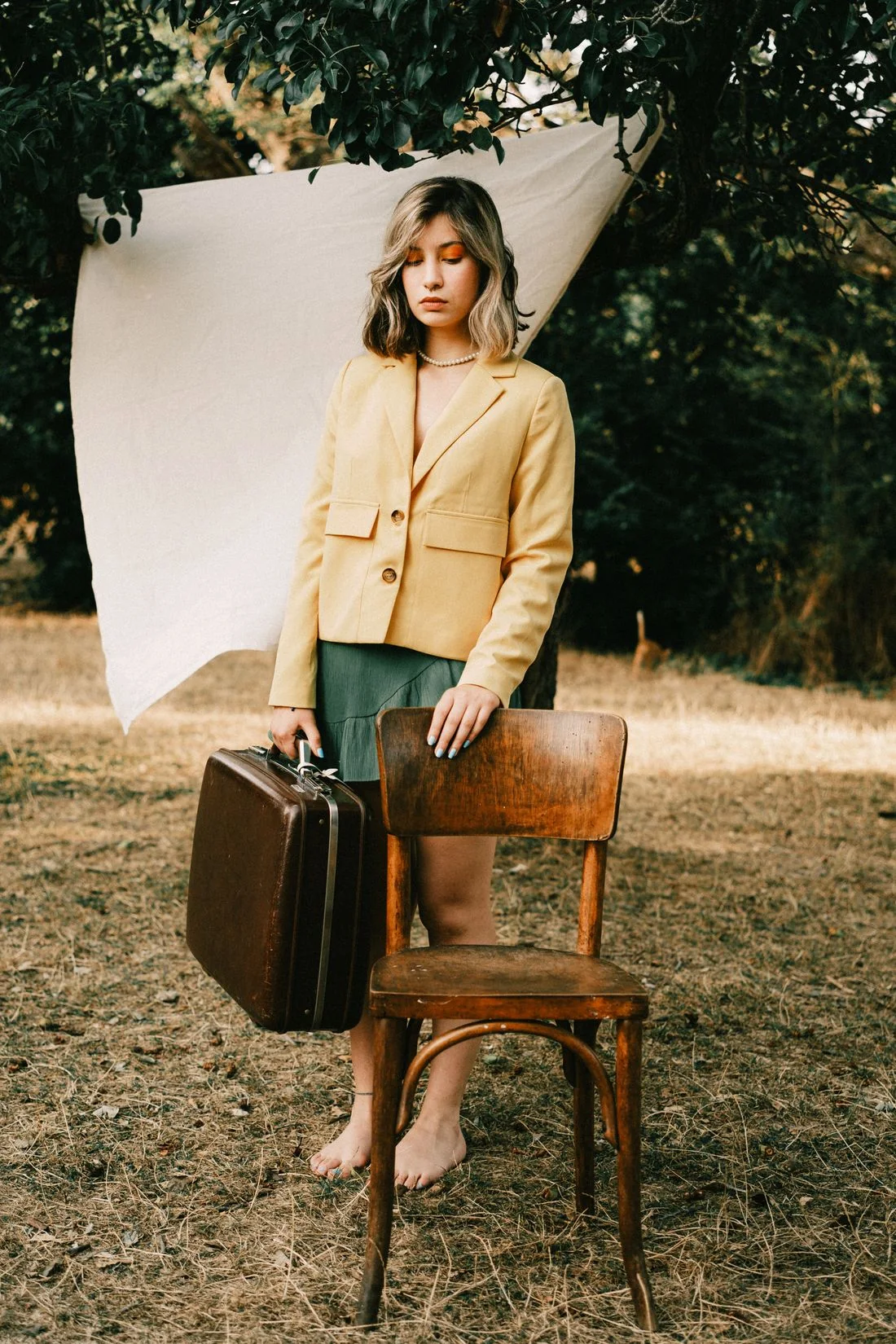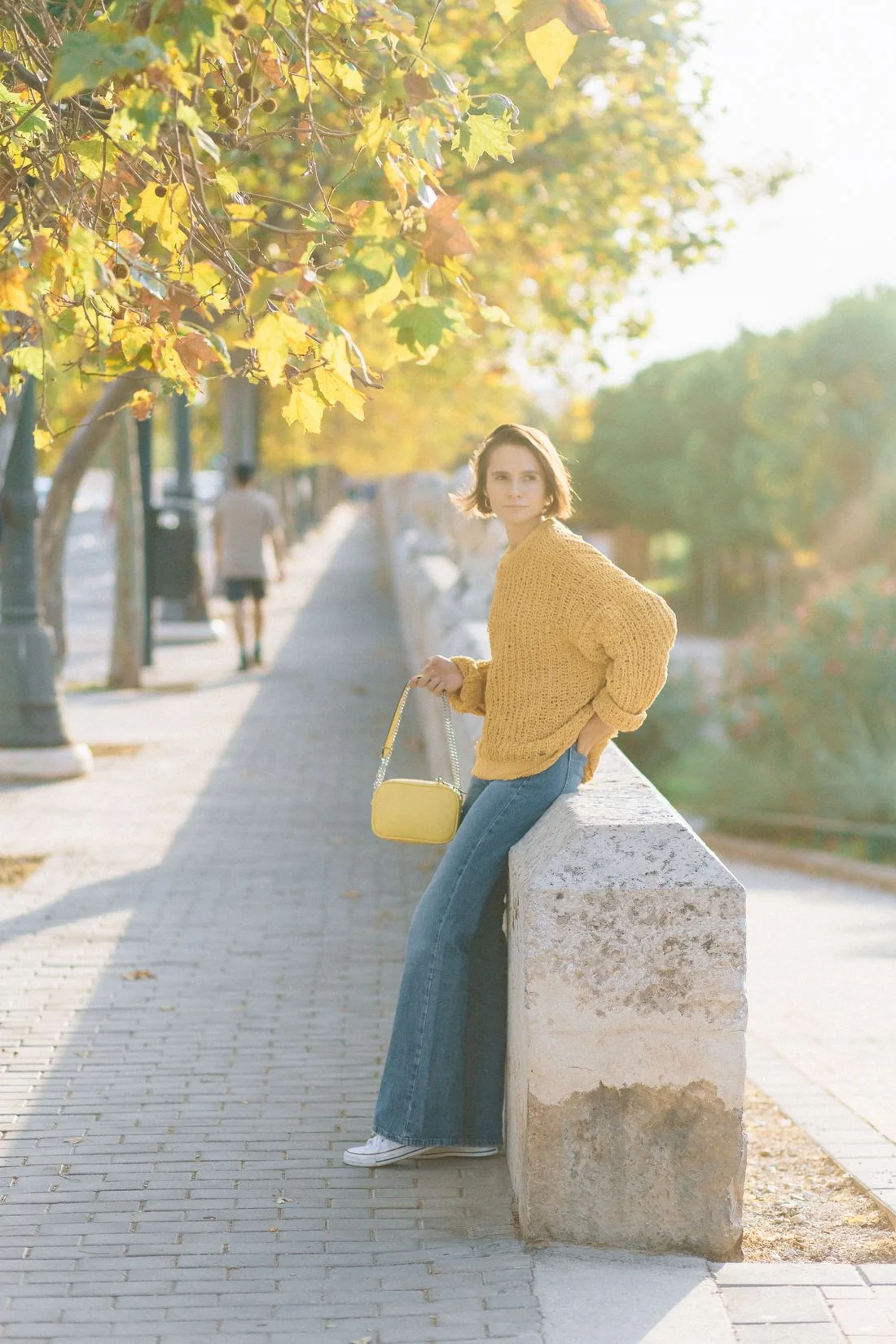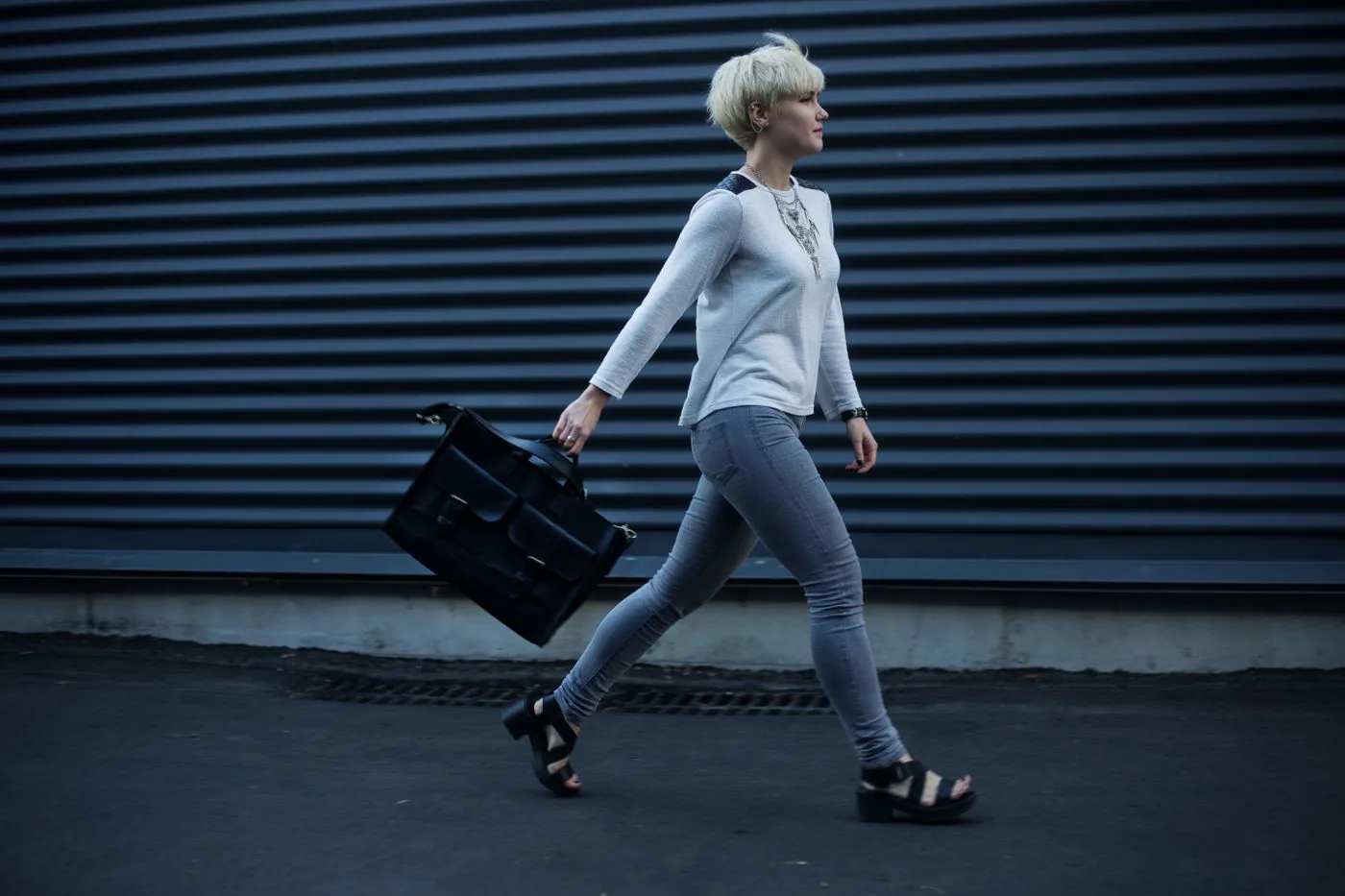
Compare a handbag’s side profile with your actual outfit and contents, keeping the visual decision distinct from assumptions made through a front-facing product image.
A handbag's front can look quite different from the side profile you see when carrying it. Compare the bag with your actual outfit and the contents you intend to use. The decision has two parts: whether the profile appeals to you and whether the bag works as an object in the day. Neither can be settled through a single front-facing product image.
Look at the shape from more than one view
Notice the bag's depth, the way its sides meet and the position of its handles or strap. You do not need technical construction language to distinguish a flat profile from a more substantial box shape. Keep the comparison through the actual item where possible, or seek clear product information when shopping remotely.
A styled photograph may show the bag empty, partly filled or arranged for the image. Avoid assuming that its visible outline represents the load you will carry. The same broad design can have a different practical presence when your belongings are inside it.
Use the contents you genuinely carry
Test the intended belongings in an appropriate permitted way and within the product's requirements. Notice whether the bag closes and can be carried as intended without forcing its shape. A visual preference should not require you to omit something essential or add unnecessary contents simply to reproduce a photograph.
The personal-item bag guide helps with the wider role of a bag across a journey. A structured handbag may serve one part of the day well without needing to replace every other travel carrier.
Compare against the actual clothes
Carry the bag with the coat or other outer layer you expect to use. Look from the side as well as the front. A crisp edge beside a soft knit may create a contrast you enjoy; a quieter flatter shape may suit another outfit. Describe that relationship without assigning a correct bag size to your body.
Check how the bag sits when you are standing ordinarily, not only when holding a pose. If a companion helps with a private reference photograph, make the purpose clear and keep the stop brief. The image is a reminder of the combination, not a measurement of how the bag ought to look on everyone.
Keep the carrying task visible
Handle the bag through the movement the day requires in a suitable fitting setting. A side profile you like does not settle whether the handle or strap works with your sleeve. The bag-handle and coat-sleeve guide addresses that separate point of contact.
If the bag's appearance and practical role conflict, name the tradeoff plainly. You may choose another bag for a transfer and keep this one for a smaller outing, or leave the purchase open. There is no need to make one object solve every journey.
Finish with a clear answer about the actual bag, clothes and contents. A useful side-view comparison can reveal a shape you enjoy or a limitation worth noticing. Either is a better basis for the decision than imagining the whole day through the most flattering angle in a product photograph.
Editorial note
Practical style and travel guidance. Follow the relevant maker’s instructions and check current arrangements with your provider. Availability and policies can change. Our outfit and packing suggestions are editorial guidance, not claims of hands-on testing.