
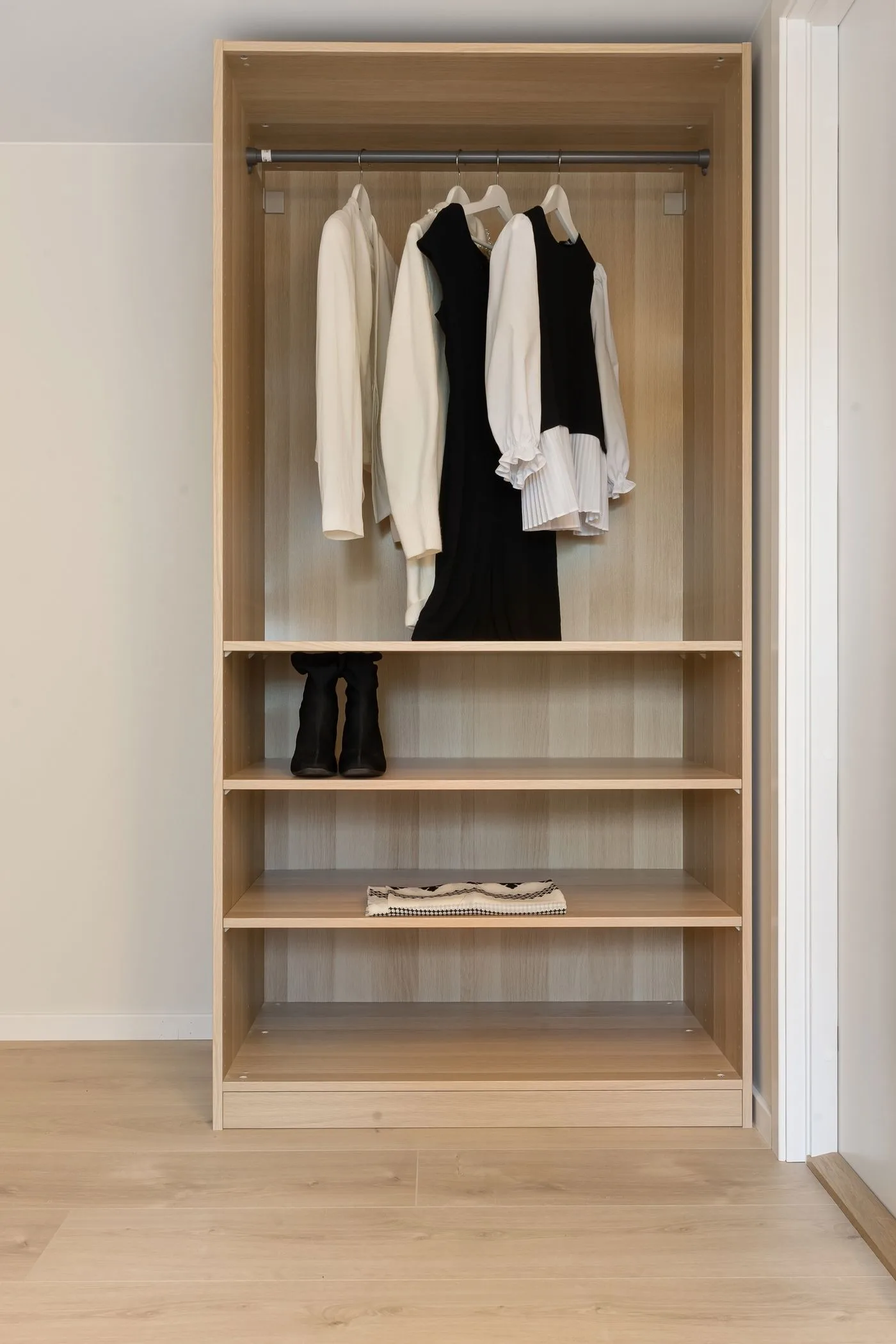
Check the hotel wardrobe as a separate departure area, including shelves, hangers and small belongings rather than relying on a general look around the room.
The suitcase can look finished while one useful garment remains behind a wardrobe door. Give the wardrobe its own checkout step instead of relying on a final glance across the room. The useful check follows the places you actually used: hanging space, shelves and any small storage associated with them. It should be calm and limited, with a clear way for each remaining item to join the packed bag before you leave the room and begin the next journey.
Remember what entered the space
On arrival, use the wardrobe deliberately rather than distributing small belongings among unfamiliar compartments without a purpose. You do not need to avoid storage entirely, but knowing its role makes the departure check easier. A hanging outfit, a spare layer and a suitable place for a bag can be a manageable group. If travelling with someone, agree which areas each person uses or check the shared space together rather than assuming the other person has already cleared it.
Open the doors before the case is sealed
Inspect the hanging area in suitable light and move only your own belongings through normal use. Check behind garments you recognise and on the shelves you used, without dismantling hotel fittings. If an item is caught or a storage feature is unclear, ask the property for appropriate assistance. Avoid forcing a drawer or climbing on furniture to search. The check should make departure straightforward, not create another problem while trying to recover a small object from an unsuitable position.
Separate hotel items from your own
Leave the property's hangers, fittings and supplied belongings where intended. Check your garment pockets before packing and ensure nothing small remains with a hanger or bag. If you used another hotel storage feature, follow its instructions for retrieving your belongings and leaving it appropriately. Do not rely on memory alone when several similar objects are involved. A direct inspection of the actual spaces is more useful than repeatedly looking at the closed suitcase and assuming everything must be inside it.
Give recovered items a clear destination
Put each remaining piece into the suitable place in your luggage, following its condition and care needs. Keep anything required for the next part of the route accessible rather than burying it because it was found last. If a garment needs attention, contain it appropriately instead of mixing it with ready clothing. Close the wardrobe and complete the other room-area checks separately, such as the bathroom and charging point. A simple sequence reduces the chance of one search interrupting another and leaving both unfinished.
Before leaving, inspect the space where the suitcase stood and confirm the bag closes comfortably. If you later realise something was left, contact the property through its normal process with a clear description. The wardrobe check is successful when it becomes an ordinary departure habit, not an anxious search. It turns one easily forgotten part of the room into a recognisable final step with a definite end.
Continue planning with A Hotel Booking Checklist for a Two-Night Trip, Packing for a Work Trip with a Weekend Attached.
Editorial note
Practical style and travel guidance. Follow the relevant maker’s instructions and check current arrangements with your provider. Availability and policies can change. Our outfit and packing suggestions are editorial guidance, not claims of hands-on testing.