Choose where a fine necklace sits against a plain top, comparing the actual neckline and outer layer before keeping the pairing in a small travel wardrobe.
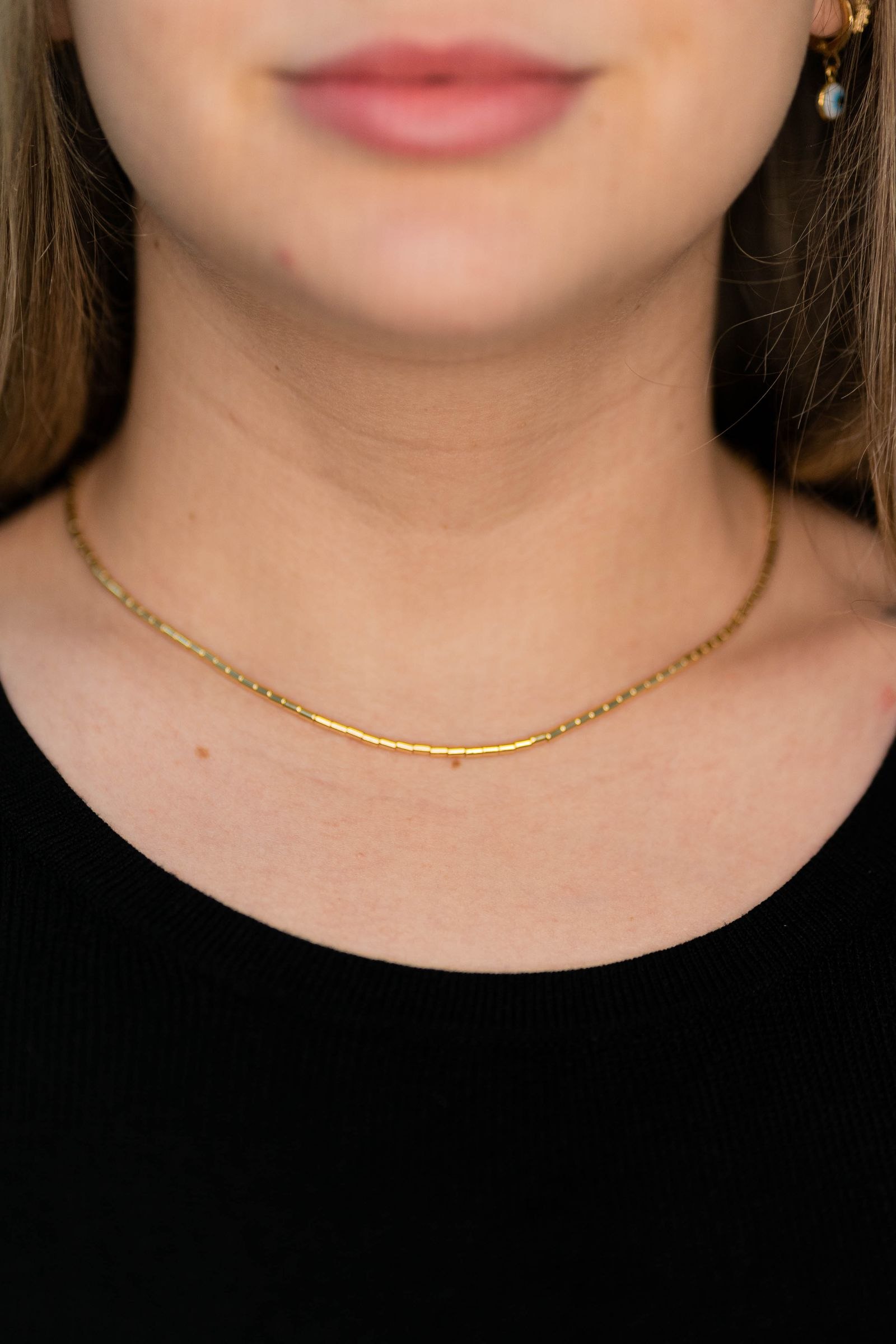
A fine necklace can create a quiet line around a plain top's neckline. Its effect changes according to whether it sits above the fabric edge, crosses it or rests on the top itself. Instead of choosing by the necklace's length alone, compare the actual pieces while wearing them. The useful arrangement is the one you enjoy in the complete outfit and can comfortably leave to settle as you move.
Start with the top’s normal position
Put on the top and arrange it with the intended bottom layer. Let the neckline sit naturally. A top pulled lower or higher for a photograph may create a necklace relationship that will not remain during the day. Notice the edge as it is before adding the jewellery, including any change when you sit or turn.
Add the necklace using its intended fastening and available adjustment, following any relevant product information. Look at the distance between its line and the fabric edge. Decide whether you prefer a clear separation or a layered effect. Neither choice needs to be justified by a universal rule about which length belongs with which neckline.
Compare visibility with movement
Move through a few ordinary actions and allow the necklace to settle. A delicate chain may shift, and a pendant may meet the edge differently when you lean forward. If the contact repeatedly catches your attention or feels unsuitable, choose another pairing rather than forcing the piece to stay in a precise position. Keep any care or handling question attached to the actual jewellery and garment.
Try one existing alternative if the first arrangement does not answer what you want. You might choose another top or a different necklace, but keep the rest of the outfit unchanged during the comparison. That lets you see whether the new relationship is the improvement, rather than attributing the result to several simultaneous changes.
Include the travel layers
Add the jacket or cardigan you expect to use. Check whether its opening leaves the necklace visible and whether another accessory occupies the same area. If the outer layer will come off during the day, consider both versions. A small travel wardrobe benefits from knowing those transitions, rather than packing additional jewellery for every possible layer arrangement.
Record the pairing with enough detail to identify the pieces and the intended fastening position. Store and transport the jewellery according to its actual requirements, separately from this styling decision. When you revisit the outfit, use the note as a starting point and check the pieces again. A fine necklace can add interest to a plain top precisely because the relationship is simple, with its place at the neckline chosen rather than continually corrected.
Related reading
Packing Jewelry for a Short Trip, A Five-Day City Break Capsule Wardrobe That Leaves Room for the Trip.
Editorial note
Practical style and travel guidance. Follow the relevant maker’s instructions and check current arrangements with your provider. Availability and policies can change. Our outfit and packing suggestions are editorial guidance, not claims of hands-on testing.