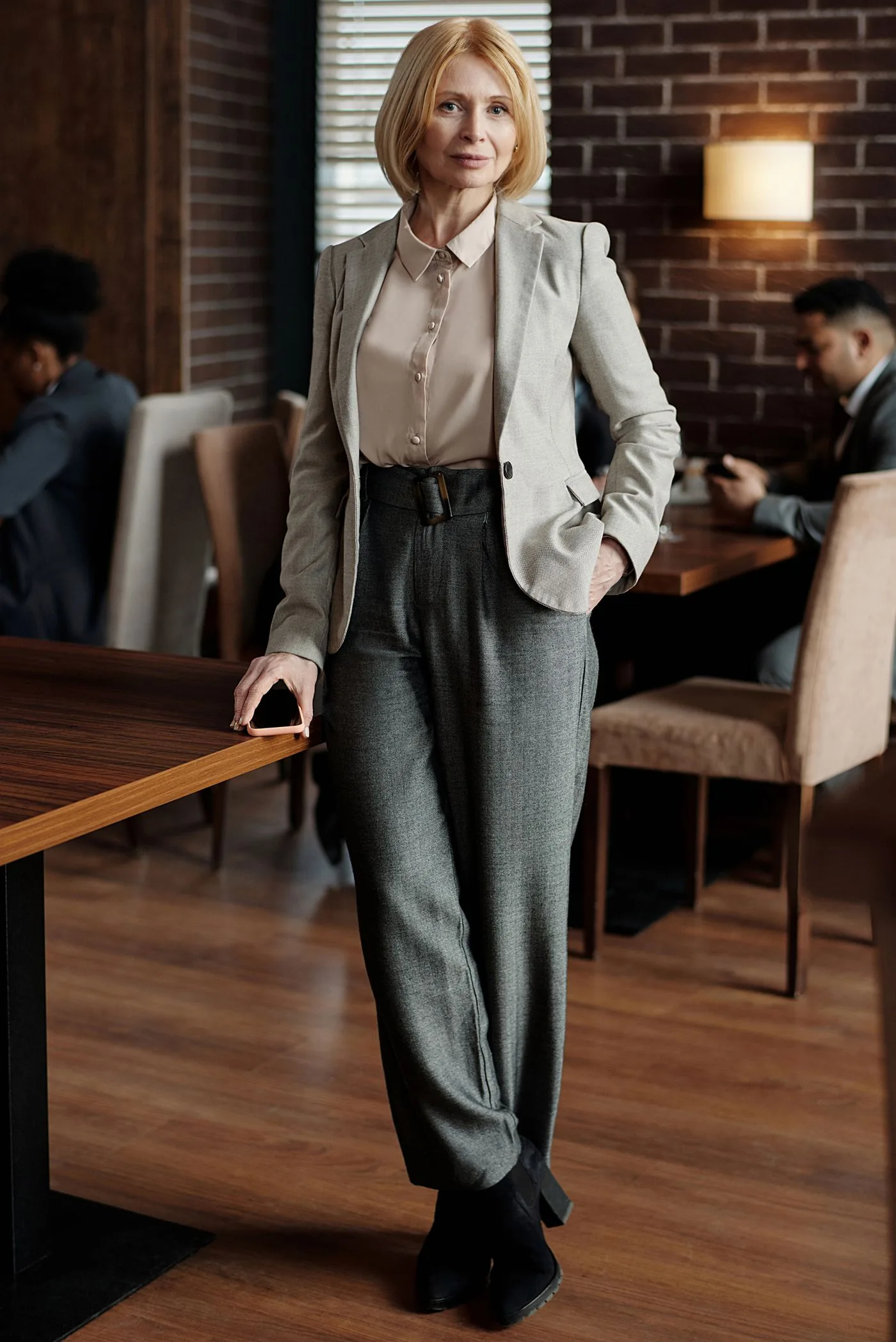
Try pleated trousers through a seated journey with the actual waistband position, layers and footwear before assigning them to travel.
Pleated trousers can make a travel outfit feel relaxed and considered, but the seated version deserves a check before departure. The waistband, front folds and pockets may behave differently once you sit for a journey. Start with the trousers in their natural comfortable position and the layers you intend to wear. The useful question is not whether the pleats remain photographically sharp. It is whether the whole garment supports the way you will spend the travel time without needing constant attention at the waist.
Establish the ordinary fit first
Put on the trousers and let the waistband settle where you normally wear it. Avoid moving it solely to create a preferred mirror proportion. Check the closure and pockets through the garment's intended use. If something is uncomfortable while standing, do not expect sitting to solve it. Choose another familiar pair or consider appropriate alteration advice at a calmer time. Travel clothing should begin with a fit you understand, rather than a styling arrangement that depends on holding the fabric in place.
Sit long enough to notice
Use an ordinary chair and remain seated for a short comfortable interval. Reach forward and stand again, noticing how the waist and pleats respond. Some fabric movement is normal and does not require correction. Distinguish that from restriction, pulling or a closure that feels unsuitable. You are checking your own comfort, not assigning the trousers a universal score. A pair can be useful for an evening and less suitable for a long seated route without either role making the garment a failed purchase.
Include the actual top and belt
Try the intended shirt or knit tucked or untucked as you plan to wear it. Add a belt only if it has a useful role and works comfortably through the seated check. Extra fabric at the waistband can change the experience, so assess the complete combination rather than each piece separately. If a tuck becomes bulky, try a simpler arrangement using the clothes you already own. There is no need to force every travel outfit into the same waist detail.
Check hems and the transition to walking
Wear the planned shoes and see how the trouser legs settle after sitting. Check comfortable movement and the relationship between hem and ground. Follow the garment's care needs when packing or hanging it at the destination. Avoid treating every crease from travel as a problem requiring an immediate hotel-room treatment. The useful plan lets you arrive, move through the next part of the route and settle into the stay without making the trousers a separate project.
When the combination works, remember it as a complete group rather than a rule about all pleated trousers. Another fabric, rise or top can change the result. A successful seated travel outfit gives you enough ease to focus on the journey. Its appearance can be enjoyed because the practical fit has already been considered, not because the clothes remain perfectly arranged through every hour in the seat.
Continue planning with What to Wear for a Long Train Journey, How to Choose a Blazer That Travels Well.
Editorial note
Practical style and travel guidance. Follow the relevant maker’s instructions and check current arrangements with your provider. Availability and policies can change. Our outfit and packing suggestions are editorial guidance, not claims of hands-on testing.