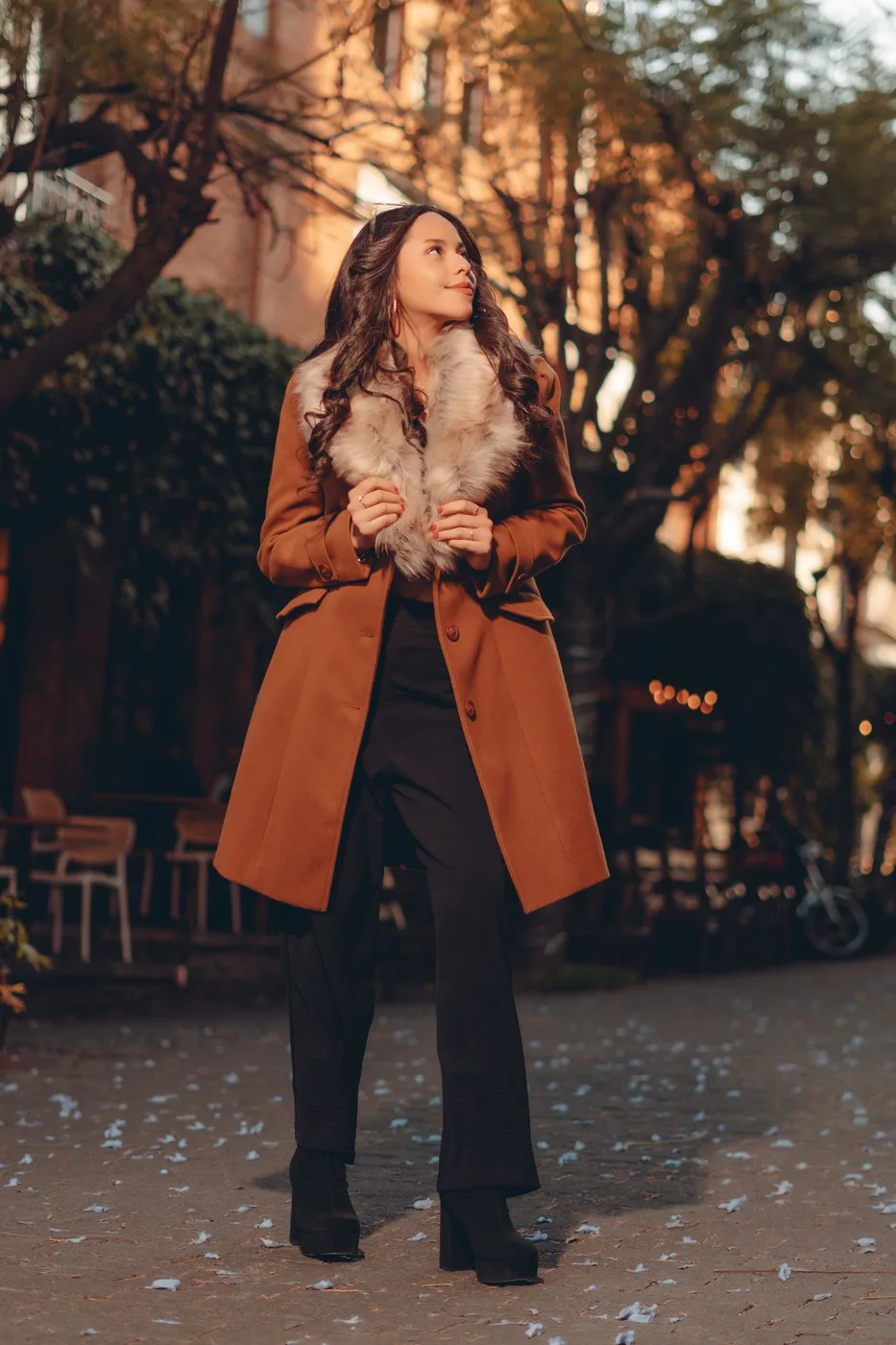
Check a scarf within the actual coat collar and fastening, including the open version and the moment both pieces come off indoors.
A scarf can look right beside a coat and feel crowded once the collar is closed. Try the real neck opening before choosing the combination for a trip. The coat's shape, scarf's bulk and layers underneath all affect the result. A useful pairing keeps you comfortable and lets both pieces function as intended. It should not depend on the coat staying open or the scarf being continually pulled into a position that looks neat only while you are standing still.
Close the coat as intended
Wear the planned base layers and fasten the coat normally. Add the scarf through a suitable arrangement that respects its shape and care needs. Check that the combination feels comfortable around the neck and allows normal movement. Do not force a bulky scarf into a narrow opening to preserve the first outfit idea. Another scarf you already own may work more easily. The practical starting point is a coat that can close appropriately for the route, not a decorative arrangement that prevents it.
Try the open version too
If the day includes warmer indoor stretches or short transitions, see how the scarf sits when the coat opens. Notice whether it slips, catches on a fastening or becomes difficult to keep contained. Choose a simple intended arrangement rather than adding an elaborate knot solely to control excess fabric. A scarf can have a different useful role with another coat. You do not need one piece to suit every neck opening in the wardrobe for it to be worth keeping.
Include the bag strap and collar movement
Put on the bag and move normally. Check whether the strap pulls the scarf or competes with the collar at the shoulder. Adjust the bag through its designed fittings and consider another familiar option if the group remains awkward. Keep the assessment practical: walking, sitting and reaching for the item used most often. A scarf should support the outfit without becoming something you repeatedly rescue from beneath a strap every time the bag moves.
Plan the indoor handoff
Take the coat and scarf off as you would at a café or venue. Decide how both will rest according to their care needs and any storage arrangements offered. Avoid leaving the scarf loosely tucked where it can fall unnoticed when the coat is moved. A suitable bag position may work if it keeps the fabric separate from objects that could catch or mark it. The return arrangement matters because a small accessory can disappear easily during an otherwise ordinary pause.
Once the pairing works through both versions, let it remain simple. You do not need to keep adjusting a natural fold or repeat a complicated tying technique before every doorway. The strongest coat-and-scarf combination makes the outdoor route comfortable and the indoor transition easy. Its appearance becomes more enjoyable when the practical space around the neck, shoulders and belongings has already been considered.
Continue planning with Choosing a Scarf for a City Break, A Rainy Autumn Weekend in London: Layers That Still Feel Put Together.
Editorial note
Practical style and travel guidance. Follow the relevant maker’s instructions and check current arrangements with your provider. Availability and policies can change. Our outfit and packing suggestions are editorial guidance, not claims of hands-on testing.