
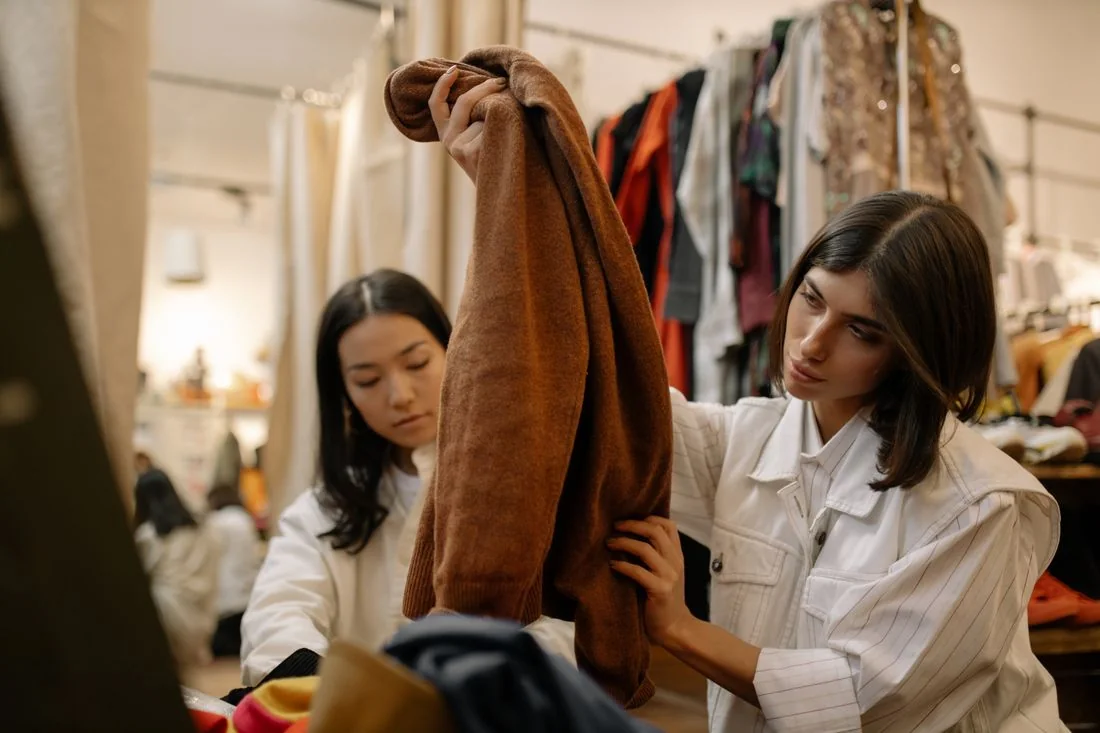
Secondhand shopping can fill a wardrobe gap, but a bargain still needs to fit the trip. Use measurements, condition checks, care labels, and a realistic deadline to compare pre-owned clothing with pieces already in your closet.
Inside this guide
Name the gap before searching
A weekend away can make every missing piece feel urgent: a jacket for dinner, jeans for transit, or a cardigan for cool mornings. Choose one specific gap before browsing secondhand listings. Write the color range, measurements, fabric preferences, and purpose on a short list. If the clothing you already own makes complete comfortable outfits, you may not need to buy anything. Secondhand shopping is still shopping, and a low price does not make an unused garment useful. Start with the itinerary and your closet rather than an endless feed of attractive items that each seem almost right for an imagined trip.
Use garment measurements as evidence
Sizes vary across brands, periods, and individual styles. Compare the listing measurements with a similar garment that fits you well, laid out in the same way. Ask about waist, hip, rise, inseam, shoulders, or length according to the piece you are buying. A label photo is helpful but cannot replace relevant dimensions. For a dress, check torso and waist placement as well as total length. For a jacket, account for the layer underneath. If measurements are missing and the seller cannot provide them, decide whether the uncertainty fits your budget and deadline. Do not assume a favorite brand will fit identically across all its older styles.
Look for wear where it affects function
Inspect photos of seams, underarms, collars, cuffs, hems, closures, and pocket areas. Ask for clearer images when a detail matters. A small cosmetic mark may be acceptable to you; a failing zipper or damaged seam can interfere with the trip. Consider whether a repair is practical before treating it as an easy fix. Knitwear deserves attention for thinning and pulled threads, while trousers need a careful look at stress points. Condition descriptions are useful but may not capture everything you want to know. Compare the photos and description together, and keep realistic expectations about buying clothing that has already been worn.
Include cleaning and alterations in the price
Read the care label if available and think about the first cleaning before wear. A garment requiring specialist treatment can cost more to prepare than its listing price suggests. Hemming or other adjustments also need time and money. Ask a suitable professional about repairs or alterations when the construction is complicated; not every issue can be fixed economically. If a piece smells strongly or its condition is uncertain, a rushed pre-trip deadline may leave little room to solve the problem. Compare the total cost with a ready-to-wear alternative and with repairing something you already own. Value comes from useful wear, not the apparent size of a discount.
Give delivery and returns enough room
Check the seller or platform delivery estimate, return eligibility, and any final-sale conditions before paying. Policies can differ across listings and locations, so read the current terms for the actual transaction. ThredUp publishes information about its secondhand model, but that does not settle another seller policy or guarantee a particular item condition. Order early enough to inspect, clean, and fit the garment before departure. Keep an outfit from your existing wardrobe as a backup while the purchase is uncertain. If the trip is days away, borrowing or wearing what you own may be more dependable than betting the first evening on a parcel arriving exactly on time.
Compare secondhand with a sensible new option
Use Everlane or UNIQLO as reference points for current measurements and a new-item alternative, not as reasons to abandon secondhand shopping. Our merchant links are research destinations and do not mean we have tested the clothing. A pre-owned piece may offer the fit or style you want, while a new garment may provide clearer product details or a more suitable return process. Neither choice is automatically better for every buyer. Avoid making broad environmental claims about one purchase without evidence. A well-chosen item worn repeatedly is a more concrete goal than declaring a shopping method perfect on the basis of its label.
Add the piece to complete outfits
Once the garment arrives and is ready to wear, try it with your packed shoes, bag, and layers. Sit, walk, and carry luggage in the combination. If it works only with another purchase, reconsider whether it solved the original gap. Photograph a couple of useful outfits for packing reference and note the care instructions. After the trip, keep wearing the item in everyday life where practical. If it stayed in the suitcase, identify why before buying another similar piece. This turns secondhand shopping into a considered wardrobe decision rather than a stream of inexpensive experiments that consume space, preparation time, and money.
The shopping shortlist
Compare these starting points against your own itinerary and wardrobe. Check the current listing, materials, measurements, delivery dates and return terms before ordering.
| Starting point | Best reason to consider it | Think twice if… |
|---|---|---|
| New-item measurement reference | Compare current measurements and fit descriptions against a pre-owned listing. | A similar brand or style name does not guarantee identical fit. |
| Everyday clothing alternative | Compare the full cost and practicality of a new basic. | Buying new is still unnecessary if an existing piece solves the need. |
New-item measurement reference
Compare current measurements and fit descriptions against a pre-owned listing.
The tradeoff: A similar brand or style name does not guarantee identical fit.
Explore EverlaneEveryday clothing alternative
Compare the full cost and practicality of a new basic.
The tradeoff: Buying new is still unnecessary if an existing piece solves the need.
Explore UNIQLOA few useful answers
Is secondhand always cheaper for travel clothing?
Not once shipping, cleaning, repairs, and alterations are included. Compare the complete cost and whether the piece will be worn beyond the trip.
What if a listing has no measurements?
Ask for the relevant measurements. If uncertainty remains, weigh that risk against the return terms and your deadline, and keep an existing outfit as a backup.
Sources & further reading
Official resources checked October 7, 2026. Availability and policies can change. Our outfit and packing suggestions are editorial guidance, not claims of hands-on testing.