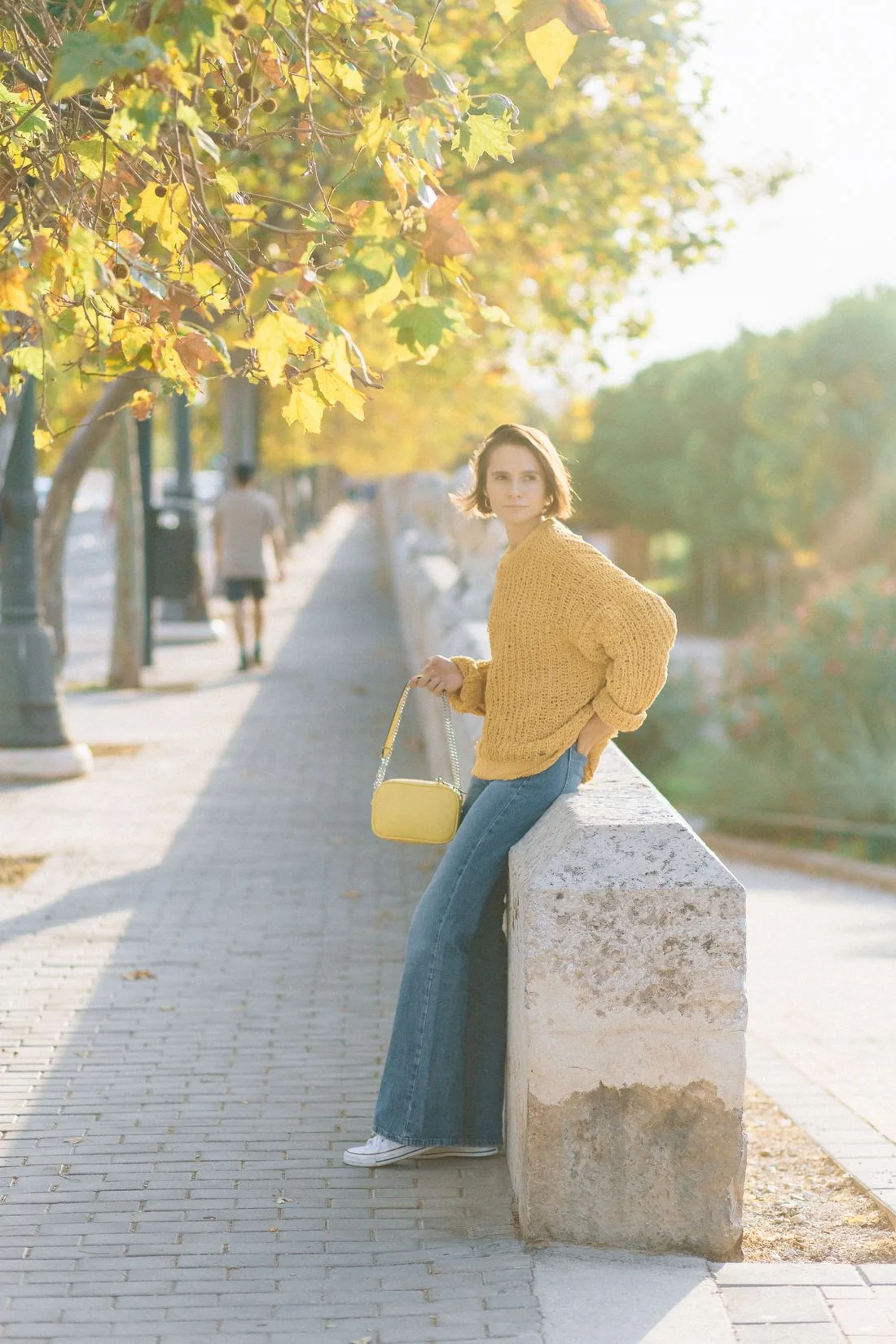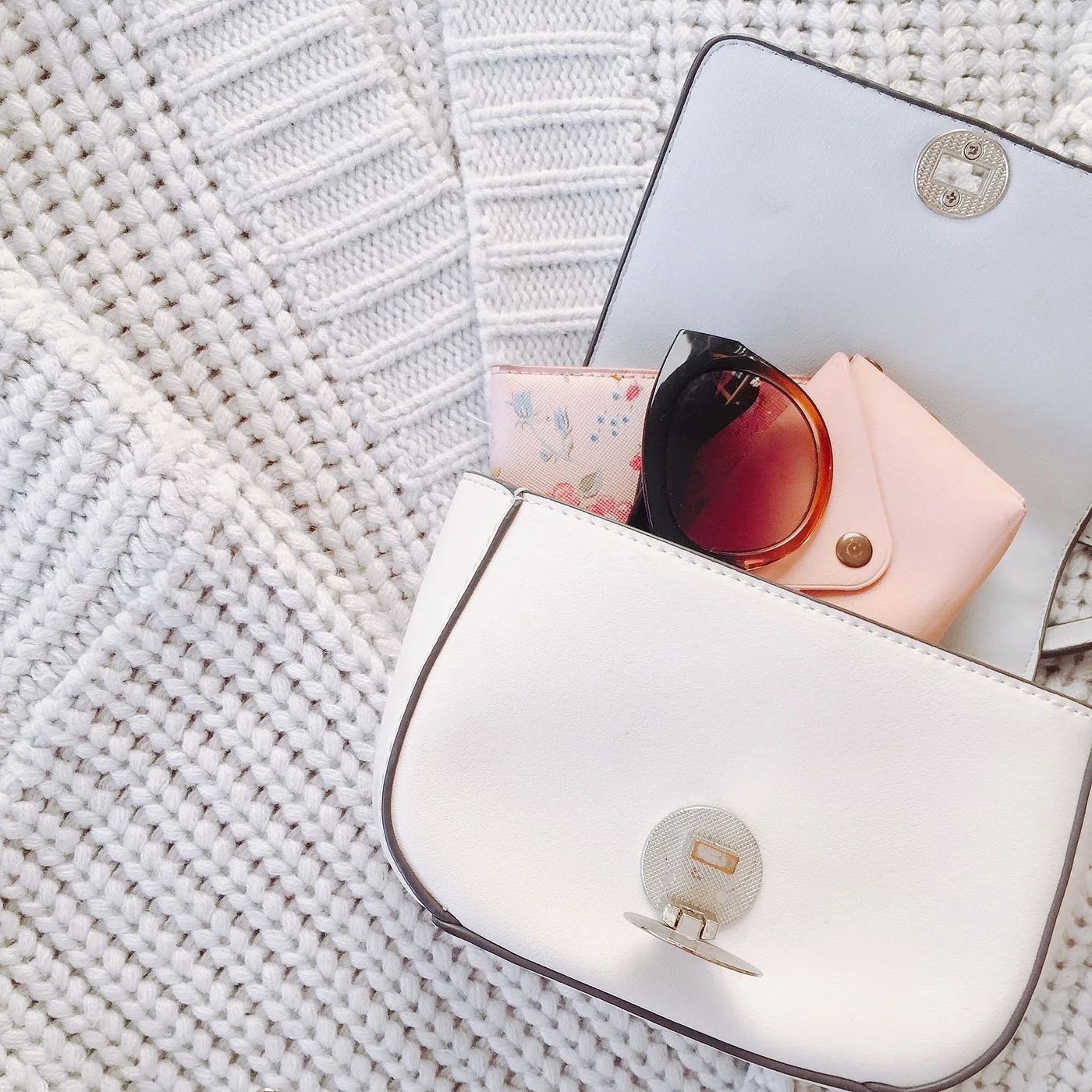
Compare a structured bag and a soft knit through their visible shapes and surfaces, trying the existing pieces together before adding another accessory to the outfit.
A structured bag and a soft knit can create a contrast through shape and surface even when their colours are close. Compare the actual pieces together before looking for another accessory to make the outfit feel complete. The useful question is what each item contributes to the visible group and whether the combination remains practical to wear. Texture does not need to become another rule about matching everything precisely.
Look at the shapes before the colours
Notice the bag's edges, broad form and handle arrangement beside the way the knit falls. A crisp rectangle can read differently from the softer line of a cardigan or sweater. Describe the contrast in ordinary words rather than assuming that one item automatically makes the other more elegant or casual.
A flat-lay photograph can show a useful idea, but it does not establish how the items behave on a person. Put the actual group on where appropriate, with the bag loaded within its intended use. Keep the image's inspiration separate from the real carrying decision.
Compare the surfaces at ordinary distance
Look at the visible knit texture and the bag's actual finish. A large knitted stitch may remain noticeable from across a room, while a subtler surface may read mainly as colour. The bag may introduce a quiet plane or a more reflective detail. Choose through what you can see rather than the label used to market the material.
Do not infer composition or care through appearance. A leather-looking surface and a smooth textile can have different requirements from what you expect. Keep the actual product information connected to each item and treat that as a separate practical question.
Add the rest of the outfit without filling every gap
Use the trousers or skirt and shoes you already intend to wear. Notice whether the bag-and-knit relationship remains clear or competes with several other strong details. Remove one optional element before assuming that another purchase will create balance.
The matching-tone contrast guide offers a related way to choose one deliberate difference in a group. The contrast can come from structure rather than a new bright colour, but that is a personal option rather than a formula every outfit needs.
Keep the points of contact practical
Carry the bag in the way the day requires and check how its handles or strap interact with the actual layer. A visual combination you like still needs appropriate handling and comfortable use. Do not assume a suitable relationship from a picture of the objects resting beside each other.
The bag-handle and coat-sleeve guide considers that practical contact more closely. A knit worn beneath a coat may create a different carrying arrangement from the one you see indoors.
Choose the version that gives both items a clear role. You may like the structured bag with one knit but prefer a quieter carrier with another. Keep a small reference if it helps repeat the actual group, then return unused options to their places. A useful texture comparison makes existing pieces more understandable without requiring the whole wardrobe to be redesigned around them.
Editorial note
Practical style and travel guidance. Follow the relevant maker’s instructions and check current arrangements with your provider. Availability and policies can change. Our outfit and packing suggestions are editorial guidance, not claims of hands-on testing.