
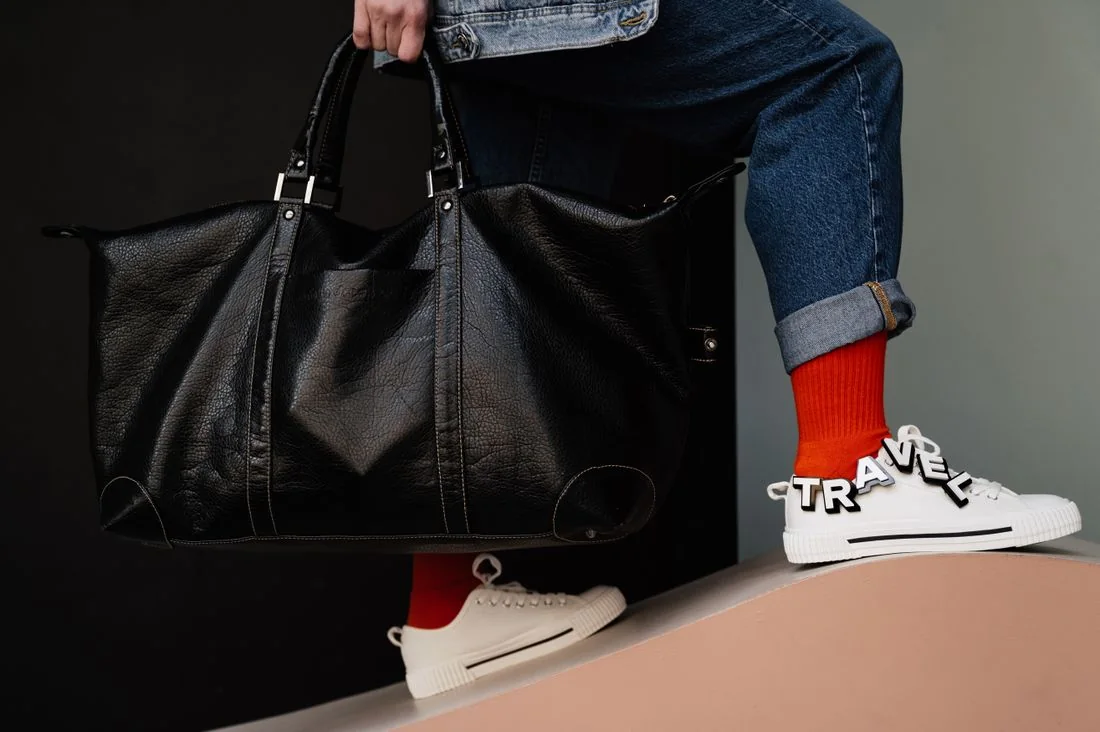
A soft weekender and a rolling case solve different travel problems. Compare the packed weight, the route between doors, and the way you reach your belongings before shopping. The right bag for a two-night stay may change when stairs, long transfers, or extra shoes enter the plan.
Inside this guide
- Start with the hardest part of the journey
- Measure the load before comparing capacity
- Understand what the weekender asks you to carry
- Understand what the rolling case still cannot do
- Compare access during the journey
- Check the allowance for the exact ticket
- Let cost include care and repeat use
- Make the decision with a home rehearsal
- The shopping shortlist
Start with the hardest part of the journey
Picture the point when luggage will be least convenient: lifting it into a rack, walking several blocks, climbing stairs, or crossing a smooth terminal. That moment is more useful than a styled packing photograph when choosing a bag. A rolling case can reduce carrying on suitable surfaces, yet its wheels do not remove the need to lift it occasionally. A soft weekender can be flexible to store, but transfers its weight to your body. Write down the actual route and your preferred way to move. Choose for the journey you will take repeatedly rather than for an ideal weekend advertisement.
Measure the load before comparing capacity
Lay out the clothing and personal essentials for a typical two-night stay. Include the charging kit, toiletries, and shoes instead of judging capacity from folded tops alone. Place everything into a bag you already own and weigh the full load if you have a suitable scale. This gives you a practical baseline for the volume and weight you need. Do not expand the packing list merely because a larger case can hold it. A bag that seems generously sized online may invite extra contents that make a short journey less comfortable without improving the weekend itself.
Understand what the weekender asks you to carry
A soft bag can suit a short direct journey when the packed contents remain manageable. Compare the handles, shoulder strap, closure, and any luggage sleeve on the particular model. Test the loaded bag in the position you plan to use; a comfortable empty strap can feel very different with toiletries and shoes inside. Think about whether you need your hands free for tickets or doors. BAGGU's official bag collection includes travel-oriented shapes to investigate, but each product's dimensions and construction need checking. A weekender is convenient only when its contents and carrying method match your actual comfort.
Understand what the rolling case still cannot do
A roller can help when a trip involves long stretches of smooth ground, especially if you prefer not to carry the main load. Check the empty weight, handles, wheel design, exterior dimensions, and interior organization of the exact case. Include handles and wheels when comparing dimensions where the carrier's rules require that. Monos' carry-on collection is one place to investigate options, but no collection name guarantees acceptance by every airline. A rigid case also needs storage space at home and in the room. Consider whether those everyday practicalities fit your life before choosing a size or shell simply for appearance.
Compare access during the journey
A soft bag with a useful opening may let you reach an extra layer without laying everything out, while a divided case can organize clothing neatly once you are at the hotel. Think about when you genuinely need access. Keep documents, charging equipment, and small personal essentials in a separate day bag so you do not have to open the main luggage in a crowded place. A bag with many pockets can help or confuse depending on your habits. Count only the compartments you have a clear use for. Extra organization is not automatically an improvement if it hides the item you need.
Check the allowance for the exact ticket
Baggage rules differ by carrier, fare, and service, so compare your selected bag with the instructions for the journey you booked. Do not rely on a retailer's broad description of a bag as cabin-friendly or a fellow traveler's experience on another ticket. A soft bag is not exempt from size limits simply because it can compress, particularly when you fill it tightly. A case marketed as carry-on still requires checking. If the trip includes multiple carriers, consider each relevant leg. The purchasing decision becomes clearer when you know the actual constraint instead of shopping under an assumed universal allowance.
Let cost include care and repeat use
Compare cleaning instructions, repair information, warranty terms, and return conditions on the exact product before buying. A soft bag may fold away easily but show wear differently from a hard case; a roller introduces wheels and handles that deserve their own inspection. Think about the journeys you take most often across a year, not just the upcoming trip. If your existing luggage handles those well, keep using it. A new purchase should solve an identifiable inconvenience, such as uncomfortable carrying or inadequate organization. Paying for a fashionable exterior alone can leave the original problem untouched while creating another item to store.
Make the decision with a home rehearsal
Pack the candidate bag during its permitted evaluation period and handle it indoors without damaging it or violating the retailer's conditions. Lift it, carry or roll it as appropriate, and check the opening and organization. Notice whether the strap shifts, the case tips, or the contents require forcing the closure. Keep tags and packaging as required while deciding. If two options both work, choose the one that fits your normal storage and budget. There is no universal winner between a weekender and a roller; there is a practical fit between a particular bag, a particular load, and your way of traveling.
The shopping shortlist
Compare these starting points against your own itinerary and wardrobe. Check the current listing, materials, measurements, delivery dates and return terms before ordering.
| Starting point | Best reason to consider it | Think twice if… |
|---|---|---|
| BAGGU soft travel bags | Compare flexible shapes, handles, and access for manageable short-trip loads. | The packed weight remains yours to carry when the bag is not on a roller. |
| Monos carry-on luggage | Compare rolling-case dimensions and interior layouts against your usual journeys. | A carry-on label does not replace checking your carrier's specific rules. |
BAGGU soft travel bags
Compare flexible shapes, handles, and access for manageable short-trip loads.
The tradeoff: The packed weight remains yours to carry when the bag is not on a roller.
Explore BAGGUMonos carry-on luggage
Compare rolling-case dimensions and interior layouts against your usual journeys.
The tradeoff: A carry-on label does not replace checking your carrier's specific rules.
Explore MonosA few useful answers
Is a weekender always better for two nights?
No. Your packed weight and route matter more than the number of nights. Long transfers or carrying discomfort can favor a roller.
Can I assume a marketed carry-on will fit my flight?
No. Compare the exact exterior dimensions and weight with the baggage rules for your carrier and fare.
Sources & further reading
Official resources checked October 7, 2026. Availability and policies can change. Our outfit and packing suggestions are editorial guidance, not claims of hands-on testing.