
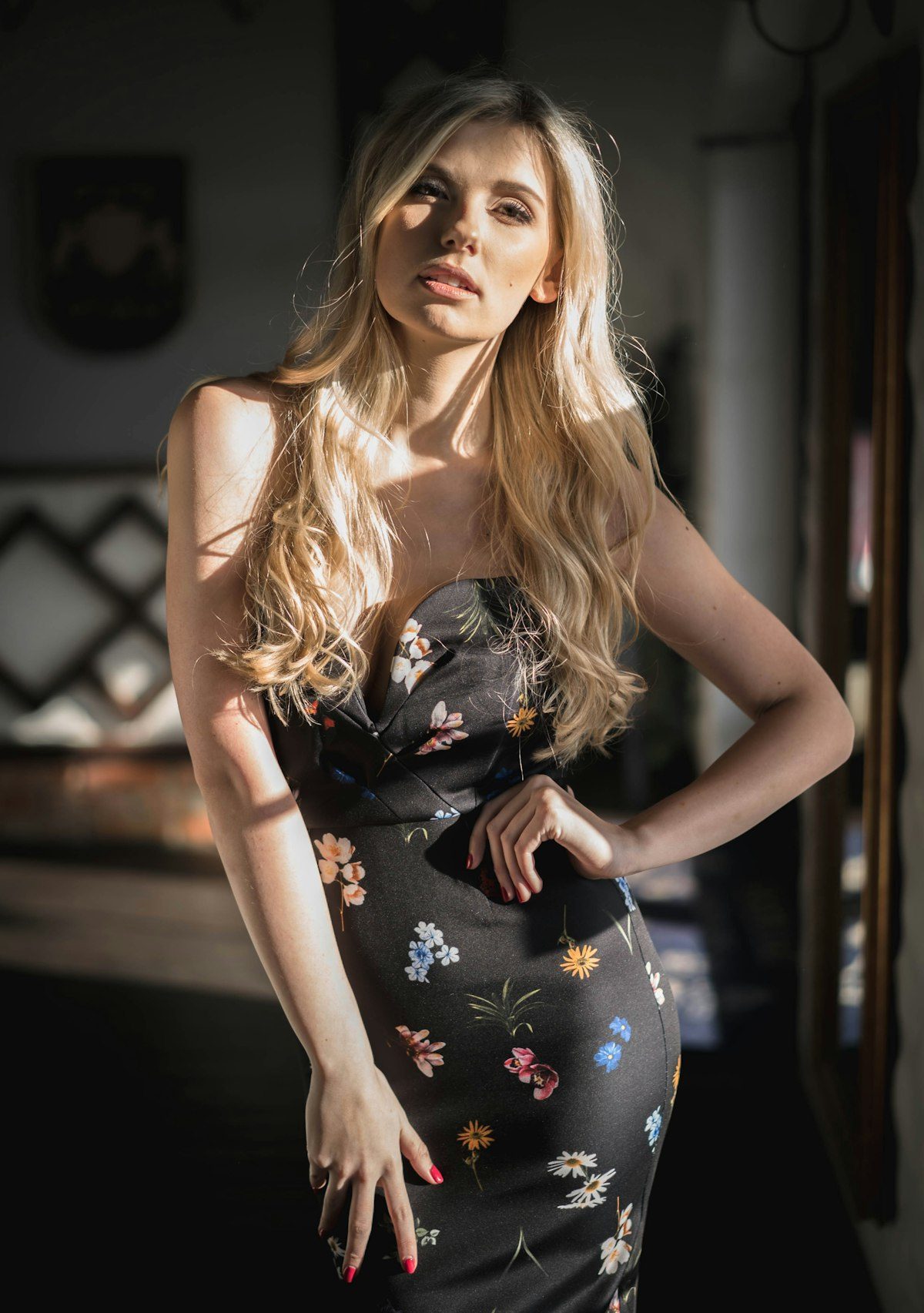
Compare a dress pattern through the size and spacing of its visible motifs, looking at the actual garment from ordinary distances before choosing an outfit.
Comparing the motif scale of two dresses becomes unreliable when their photographs provide different kinds of evidence. One listing may show the whole garment while another offers only a close detail. Before choosing between the patterns, establish whether you can make a fair comparison at all. This is an image-evidence exercise for a shopping decision, rather than a mirror routine or a rule about which print belongs to a particular body.
Label the evidence for each dress
Create a short note with one line per actual product. Record whether its available image shows the complete dress, a partial garment or a fabric detail. Keep the seller’s actual product reference beside the line so a photograph from another item does not enter the comparison accidentally.
Do not assume two motifs are the same physical size because they occupy similar space on your screen. A close crop can enlarge a small mark, while a full-garment view can make a larger one appear modest. The display size is not an established measurement of the print.
Make a comparability check
Imagine dress A has a full view and a detail, while dress B has only a detail whose surrounding garment is not visible. This is a hypothetical evidence problem, not a description of a particular retailer. Mark A as having garment context and B as missing that context. Do not choose the supposedly smaller motif by comparing the two detail pictures alone.
Where suitable equivalent views are available, use them to ask a limited question about the visible pattern relationship. Even then, avoid inferring exact physical dimensions from images whose scale has not been established. A fairer view can improve understanding without turning the photograph into a measuring tool.
Ask for the missing context
Use the seller’s appropriate process to request a relevant wider view or reliable information about the actual product. State what prevents the comparison: you can see a motif but not its relationship to the dress. A focused request is clearer than asking whether the print is large or flattering without explaining your reference.
Keep any answer attached to the correct product. If the missing context remains unavailable, record the uncertainty and decide whether you are comfortable leaving the choice open. Do not replace evidence with an assumption about a familiar brand or a similar-looking pattern elsewhere.
Separate the next styling question
Once you understand the actual pattern well enough, you can consider the existing wardrobe it would join. The small accessory group guide addresses that later task. It should not be used to invent a supporting outfit that makes an uncertain product image feel more convincing.
Fit and possible alterations remain separate too. The movement-question guide helps explain an actual garment concern; it cannot establish the scale of a print hidden by an incomplete listing. Finish the comparison with one clear outcome: the views support your preference, more context is needed, or the evidence is insufficient for this purchase. Knowing which conclusion the images justify is more useful than confidently ranking two patterns shown on incompatible terms.
Editorial note
Practical style and travel guidance. Follow the relevant maker’s instructions and check current arrangements with your provider. Availability and policies can change. Our outfit and packing suggestions are editorial guidance, not claims of hands-on testing.