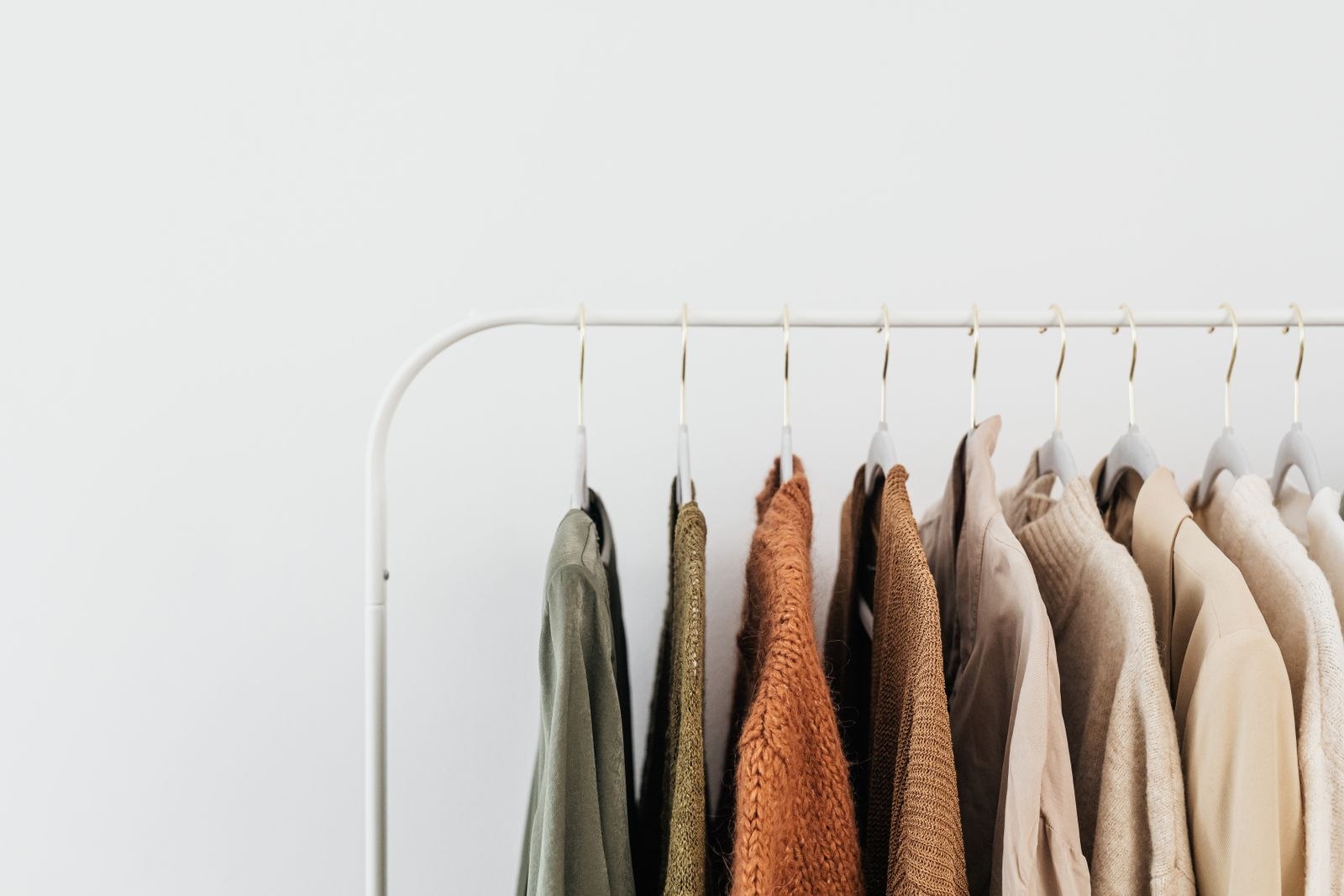
Distinguish the garment being sold from the rest of a styled clothing rail, checking the item title, variant and included pieces before comparing an online option.
A clothing rail can make an online image feel like a complete wardrobe. Several coordinated garments hang together, suggesting outfits before you have even opened the details. The product being sold may be only one of those pieces. Before comparing the option with your own travel wardrobe, establish the scope of the actual listing. The surrounding styling is context, not automatically part of the purchase.
Connect the image with the item title
Read the product name and description attached to the page you are viewing. Identify which garment the listing concerns and which colour or variant is currently selected. A gallery may show more than one option, so do not assume every picture describes the same exact item. Keep the selected identity with any notes you make about measurements or features.
Look for a clear statement about included components. A jacket shown beside matching trousers may be sold separately, while another listing may describe a set. Use the actual wording rather than the arrangement on the rail to decide which applies. If the distinction remains unclear and would affect your choice, ask the seller a specific question before treating the offer as understood.
Separate inspiration from confirmed detail
You can still use the rail image to think about a colour relationship or an outfit direction. Keep that inspiration in a different part of the note from facts about the item. A pleasing combination does not establish fabric composition, care instructions or the fit of the particular size you are considering. Consult the relevant product information for those questions.
Compare the item with clothes you already own. If the attraction depends on the whole photographed group, identify which supporting pieces you would actually need. An apparently simple purchase can become several new additions when the styling is counted honestly. Decide whether the single garment has a real role without relying on the rest of the rail arriving with it.
Make a product-specific comparison
Save the exact listing identity and any clarification that matters to the decision. Keep measurements associated with the relevant version rather than combining numbers from several similar pages. When comparing another option, use the same scope: one garment against one garment, or a clearly described set against another comparable arrangement.
If you choose to order, follow the seller's actual process and applicable information rather than relying on a general shopping assumption. When the item arrives, compare its identity and included parts with the details you used. The purpose of this review is simple: let an attractive rail offer ideas while keeping the purchasing decision tied to the object that is genuinely being sold. That distinction makes both the wardrobe plan and the price comparison much clearer.
Related reading
Buying Fewer, Better Travel Accessories: A Practical Shopping Filter, Shopping Secondhand for a Travel Wardrobe.
Editorial note
Practical style and travel guidance. Follow the relevant maker’s instructions and check current arrangements with your provider. Availability and policies can change. Our outfit and packing suggestions are editorial guidance, not claims of hands-on testing.