Compare the visible ends and width of a long scarf with the actual outfit, keeping its ordinary movement and the indoor version of the clothes in view.
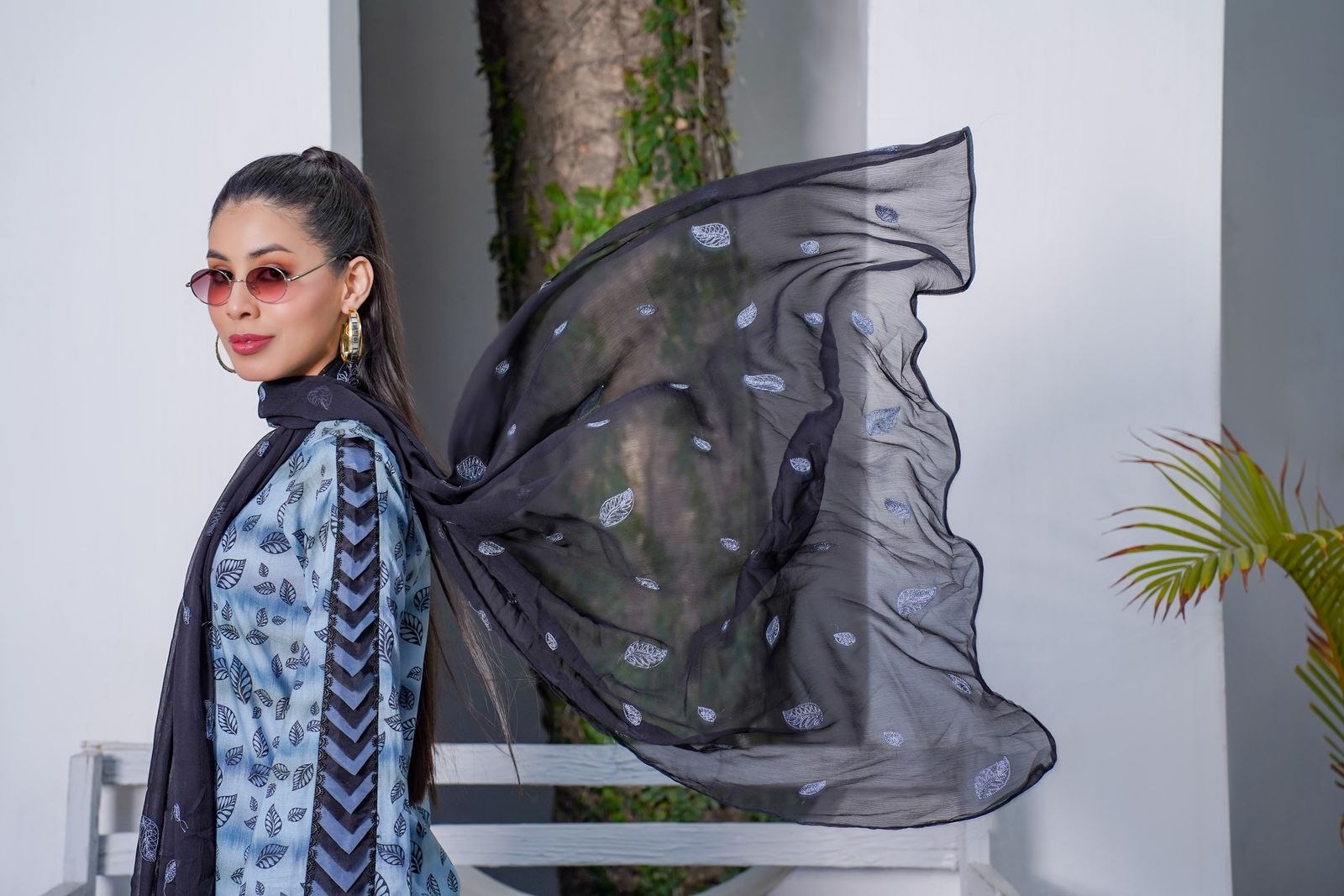
A long scarf can introduce pattern, movement and a strong vertical line to an outfit. A photograph may show its ends flowing in a particularly attractive position, but that moment is not the same as the way it will settle during your day. Begin with the front view you can actually wear. Then decide how much of the scarf you want visible and what the rest of the outfit needs around it.
Put the scarf with its intended layers
Wear the top and outer layer you expect to use, rather than comparing the scarf against an unrelated garment. Arrange it in a way suited to its design, your comfort and any relevant instructions. Let the ends settle without holding them for the mirror. Notice their length, width and the part of the pattern that is visible.
Look at the whole front of the outfit. A broad patterned area may already provide the main interest, while a narrower line can leave more space for the top or jacket. Decide which feeling you prefer before adding another accessory. The scarf does not need to reproduce every feature of a styled image to make a successful combination with clothes you own.
Observe the natural movement
Walk a short distance in a clear place, turn and sit if that reflects your ordinary use. Check how the ends move and where they return. Keep the arrangement appropriate around equipment, routes and activities; do not force a long loose shape into a setting where it is unsuitable. The practical decision belongs to the actual circumstances, not to a general styling rule.
If the front becomes busier than you wanted, simplify one neighbouring detail or try another existing arrangement. Compare the result without changing the entire outfit. You may prefer fewer visible jewellery pieces or a quieter top beneath the scarf. A single adjustment can clarify the pattern's role more effectively than adding another colour to balance it.
Plan the version without the scarf
If you expect to remove it indoors, look at the outfit in that state as well. Decide where the scarf will go according to its actual handling needs and your carrying arrangement. It should not become a loose extra object with no place simply because it was chosen as the main outdoor accent.
Save a reference that shows the scarf's ordinary resting position rather than only a dramatic moving moment. Add the identities of the supporting garments and any useful arrangement note. On another day, conditions and activities may suggest a different choice. The value of the reference is that you know one practical front view that works, letting a long scarf bring character to a travel outfit without relying on a fleeting photographic pose.
Related reading
Choosing a Scarf for a City Break, Check a Scarf inside the Coat’s Actual Neck Opening.
Editorial note
Practical style and travel guidance. Follow the relevant maker’s instructions and check current arrangements with your provider. Availability and policies can change. Our outfit and packing suggestions are editorial guidance, not claims of hands-on testing.