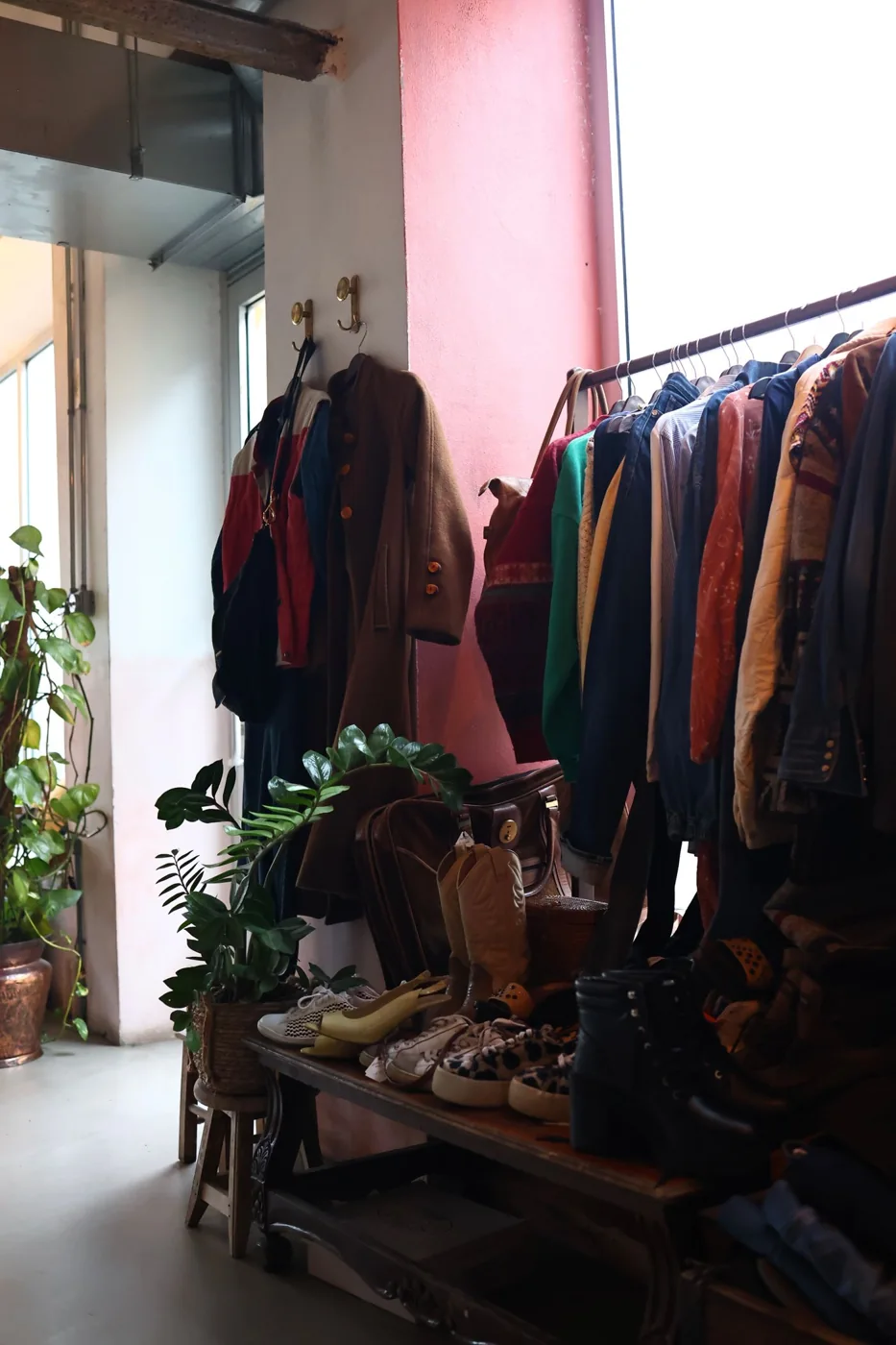
Choose the condition details that matter to your intended use of a vintage garment, asking specific questions about the actual item rather than relying on a styled rail.
A vintage rail can be full of individual pieces whose age, construction and present condition differ. The useful shopping question is not whether vintage clothing is generally good or bad. It is whether the particular garment you are considering suits the role you want it to fill, with its current condition understood. Decide which details matter most to that role before letting the atmosphere of the shop carry the whole decision.
Name the intended use
Describe the outfit or occasion the garment would support. A coat for frequent ordinary wear may raise different questions from a piece chosen for an occasional event. Keep the need specific enough to guide your inspection. If the attraction is mainly visual, acknowledge that honestly rather than inventing a practical role after the fact.
Look at the actual garment through the seller's permitted process. Notice visible areas relevant to use, such as closures, seams, cuffs or lining. A styled rail can suggest an overall character while hiding those details. Do not infer the condition of one piece from the appearance of the group around it or from the general description of the shop.
Ask about the detail that affects the choice
Turn uncertainty into a specific question. You may need to understand whether a fastening is complete, whether a belt belongs with the item or what the seller means by a condition description. Keep the answer attached to that garment. A general reassurance about the collection does not necessarily resolve a question about the piece in your hands.
Use the actual available information for material, care and any relevant history. Avoid assigning a fibre or precise era from appearance alone if that fact matters to you. If the seller cannot establish a detail, decide whether the remaining uncertainty is acceptable for your intended use. An unknown fact should remain unknown rather than being replaced by an attractive story.
Keep possible work separate from readiness
If you are considering repairs or alterations, seek appropriate assessment before assuming they will be simple or successful. A garment needing work has a different status from one ready for the trip you are packing. Keep timing and any proposed work clear in the decision. Do not make the rest of the wardrobe depend on an unconfirmed outcome.
Compare the item with your original purpose and your own acceptable condition. It is reasonable to pass on an appealing piece that leaves an important question unresolved. If you proceed, follow the seller's current purchase information and preserve relevant clarification. A considered vintage choice respects the individuality of the garment by looking at the actual object, allowing its character to be enjoyed alongside a clear understanding of what you are choosing.
Related reading
Shopping Secondhand for a Travel Wardrobe, Buying Fewer, Better Travel Accessories: A Practical Shopping Filter.
Editorial note
Practical style and travel guidance. Follow the relevant maker’s instructions and check current arrangements with your provider. Availability and policies can change. Our outfit and packing suggestions are editorial guidance, not claims of hands-on testing.