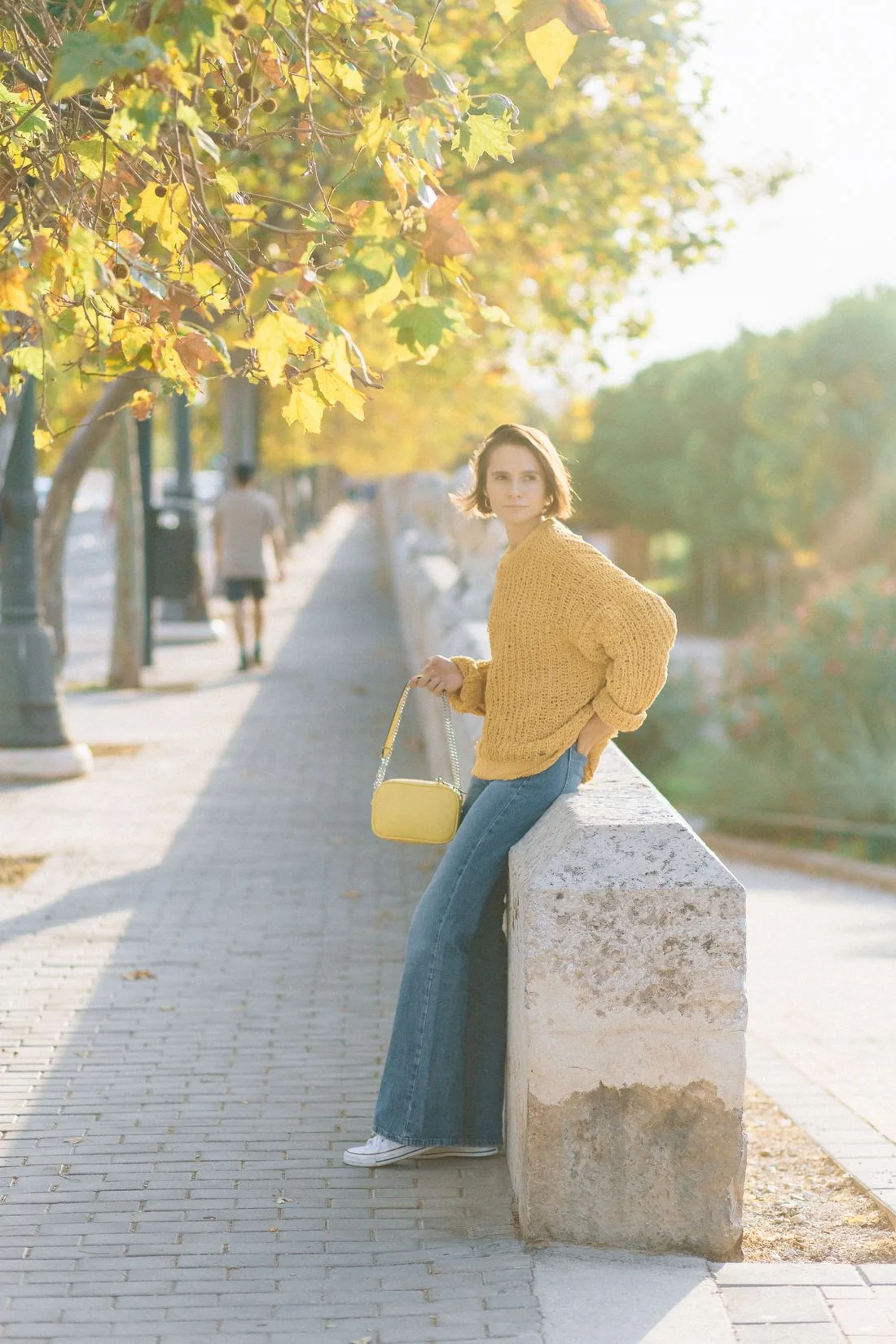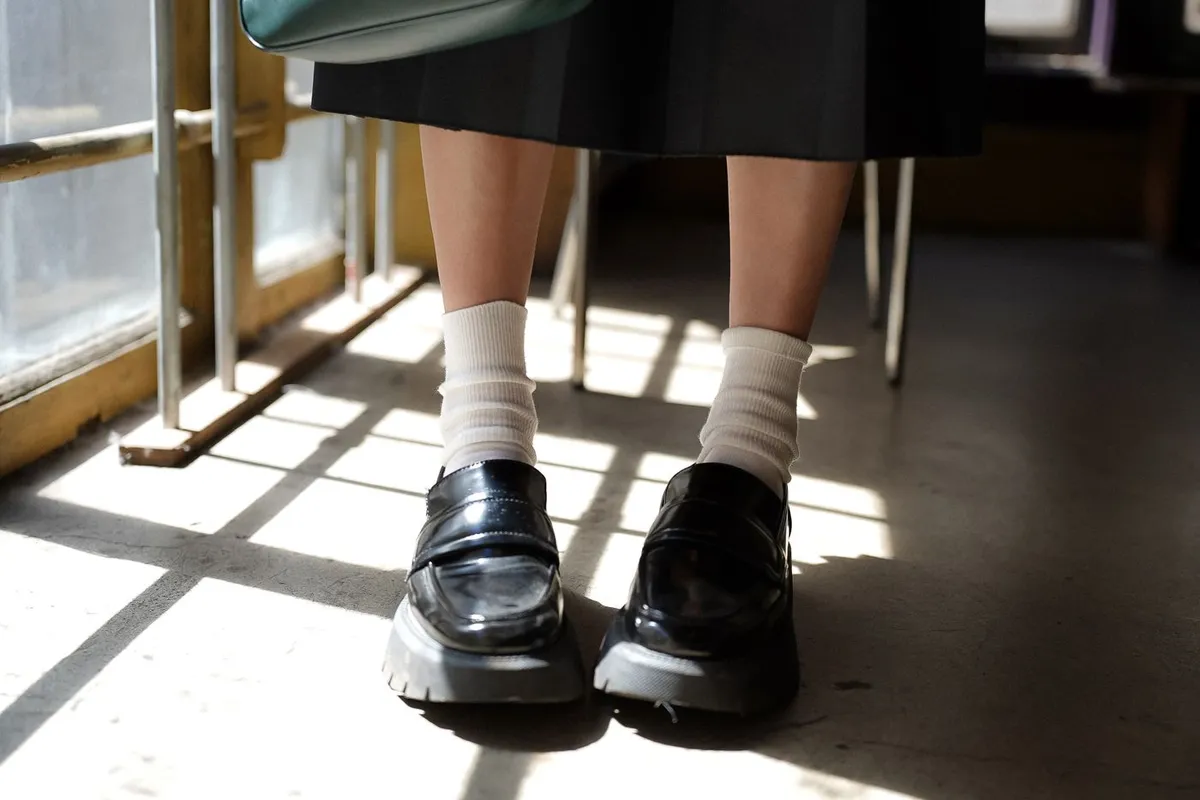
Compare visible socks with the actual shoe and trouser opening, choosing the colour relationship you enjoy while keeping comfort and care as separate decisions.
Visible socks can become part of the colour and spacing in an outfit, but the shoe and trouser need to be considered with them. Try the actual combination rather than choosing socks through a close-up alone. You may prefer a clear contrast, a quieter transition or almost no visible sock at all. The useful decision is the version you enjoy and can wear comfortably through the intended day.
Establish how much will actually show
Put on the trousers and shoes you intend to wear. Look while standing and sitting, and notice whether the opening changes during ordinary movement. A sock that is barely visible in one position may become a larger part of the outfit in another.
Do not assume a product photograph gives that relationship for your clothes. The trouser hem, shoe opening and way the fabric moves all belong to the actual combination. You do not need a perfect repeated gap; you need to know whether the changing view suits your preference.
Compare colour through the whole group
Try a familiar pair first, then one alternative if you have it. A pale sock beside a dark shoe can create a clear boundary, while a closer colour may make the transition quieter. Describe what you see rather than treating either effect as a universal improvement.
Look at the upper part of the outfit as well. A sock colour may echo a small detail or remain deliberately separate. There is no requirement to find a matching object elsewhere on your body. If the connection feels forced, a simpler existing pair may be the clearer choice.
Keep comfort and handling independent
Wear the actual socks with the shoes in an appropriate permitted fitting situation. A pleasing colour relationship does not establish that the combination fits or feels suitable. Follow the relevant product guidance and use appropriate individual advice for any important suitability concern.
Avoid solving a visual question by forcing a sock into an arrangement that will not stay comfortable. A folded cuff or gathered section can change during use. If you are considering a different handling method, check the product's own requirements rather than assuming every material behaves the same way.
Check the intended travel role
Consider when the outfit will be worn and whether the socks belong to the shoe plan you already have. The second-shoe decision guide helps keep a small styling question from creating another pair of shoes to pack. Existing pieces can supply variety without expanding the whole case.
If the trousers also need an evening role, the cropped-trouser shoe guide addresses that separate combination. One sock decision need not serve every possible moment of the trip.
Keep a brief private outfit note if the comparison was useful, identifying the actual trousers and shoes rather than only the sock colour. Then choose the version and stop adjusting. Visible socks can be an intentional detail without becoming a rule about what a particular body or trouser length is allowed to wear.
Editorial note
Practical style and travel guidance. Follow the relevant maker’s instructions and check current arrangements with your provider. Availability and policies can change. Our outfit and packing suggestions are editorial guidance, not claims of hands-on testing.